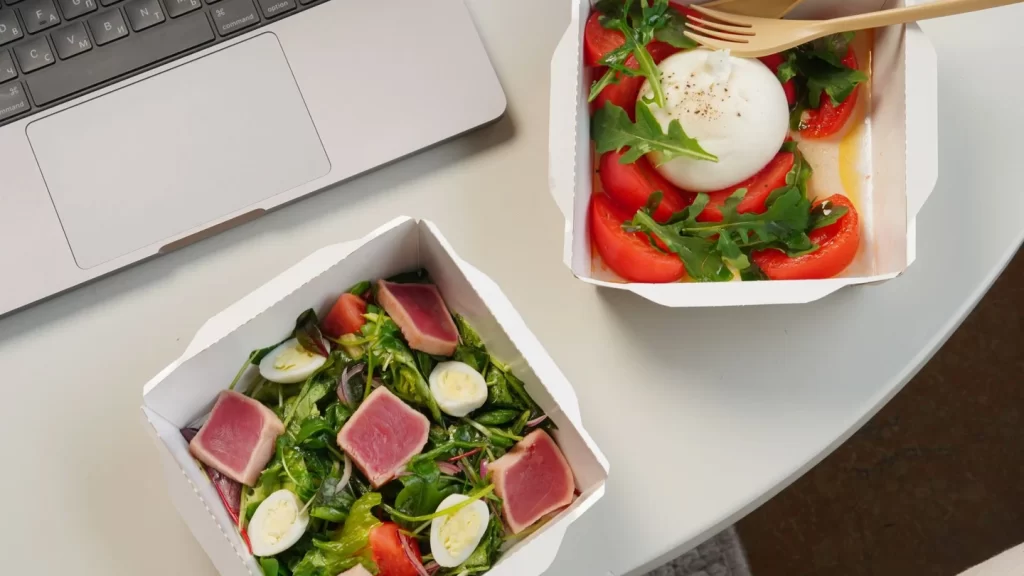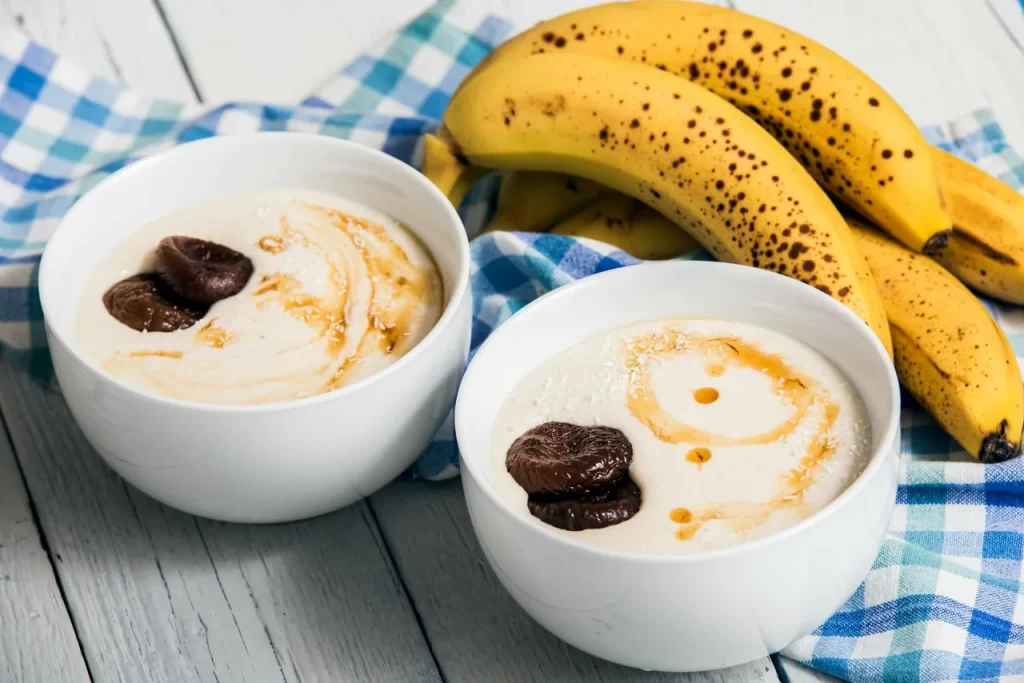
You can build a high-fiber breakfast without bran cereal by combining a whole-grain or bean base with fruit, nuts, or seeds. Start with a breakfast you already enjoy and change one ingredient. Oatmeal with berries, yogurt with fruit and oats, or beans on whole-grain toast are practical starting points.
Below are five food combinations, a portion-based fiber reference, and lower-effort swaps. These are meal-building ideas—not tested recipes or a treatment for constipation.
Which breakfast ingredients actually add fiber?
Look at the portion you will eat, not just the words “whole grain” on the packet. The table uses generic USDA food-composition values from its food sources of fiber reference. Values vary by food and preparation; packaged food labels may differ.
On a phone, swipe the table sideways to see all columns.
| Ingredient | Portion | Approx. fiber | Easy use |
|---|---|---|---|
| Raspberries | ½ cup | 4 g | Top oats or yogurt |
| Pear | 1 medium | 5.5 g | Slice beside toast |
| Black beans, cooked | ½ cup | 7.5 g | Warm and mash onto toast |
| Chia seeds | 1 tablespoon | 4.1 g | Stir into a moist breakfast |
| Almonds | 1 ounce / about 28 g | 3.5 g | Chop into oats or eat alongside |
| Banana | 1 medium | 3.2 g | Slice into overnight oats |
The raspberry value is half the reference’s 8 g per cup. Portions are comparison examples, not requirements. A tablespoon of chia is not the right first step for everyone; you can start smaller.
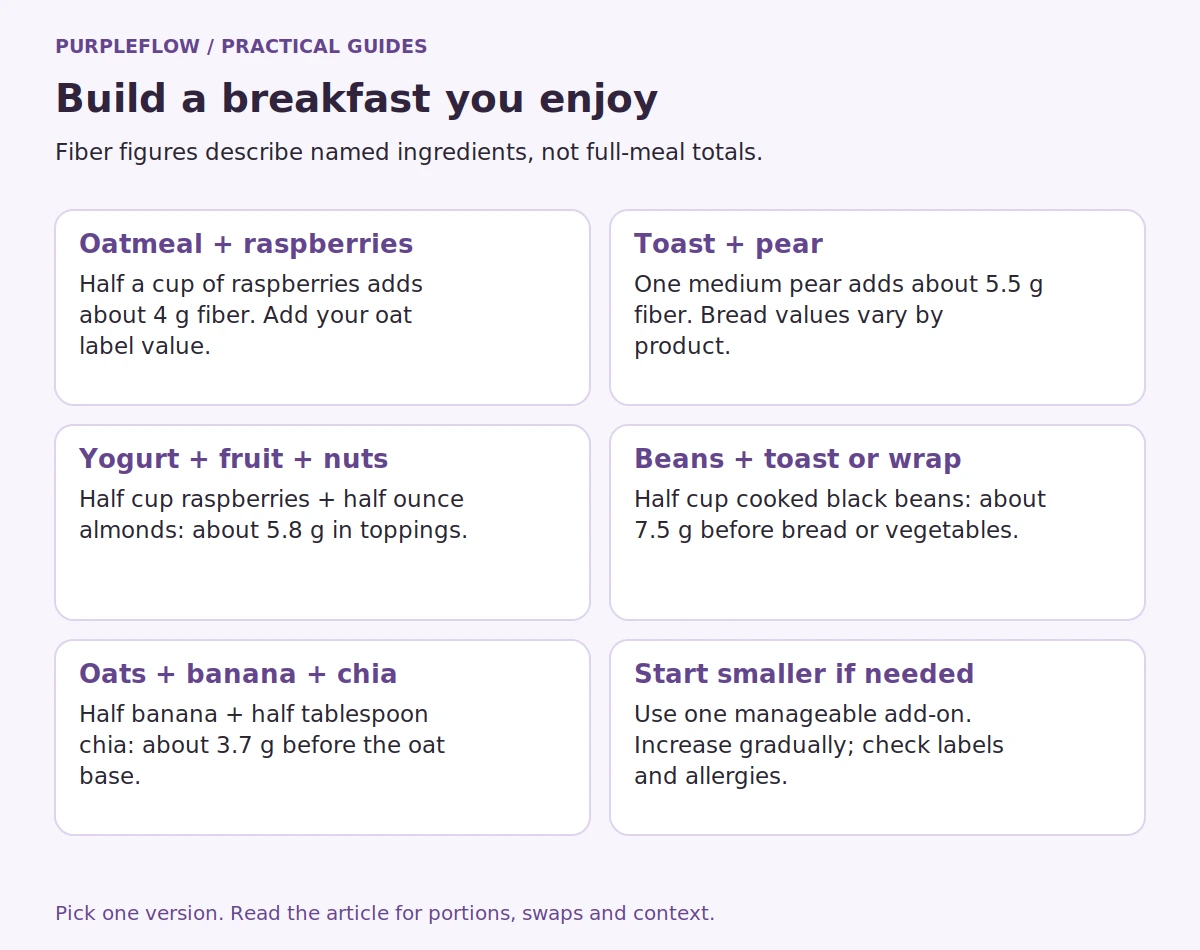
Five high-fiber breakfast ideas without bran cereal
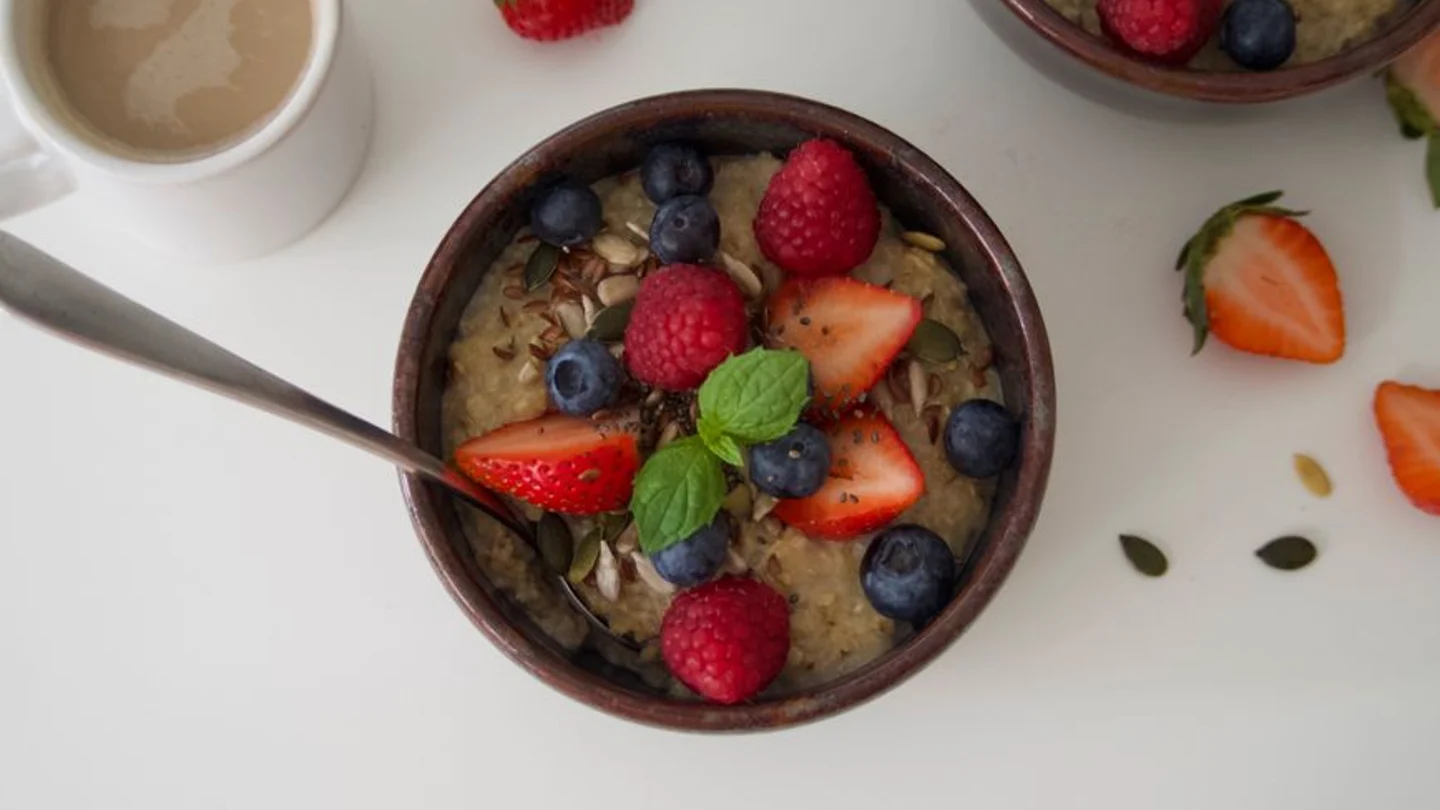
1. Oatmeal with berries: the familiar warm option
Cook your usual oats according to the packet, then add ½ cup raspberries. Fresh or frozen berries can work; follow the package’s preparation instructions. Add yogurt, milk, or an alternative you enjoy if you want to round out the meal.
Fiber you can compare: the raspberries contribute about 4 g; add the oats’ label value for your portion. For example, if your oats provide 4 g, the oats-plus-berries total is about 8 g. That oats figure is a label-input example, not a universal value.
2. Whole-grain toast with a pear: the low-prep option
Toast one or two slices and use a topping you like, such as peanut butter or an egg. Eat a medium pear alongside, or slice part of it onto the toast. The pear contributes about 5.5 g fiber; add the bread and topping values from their labels.
Make it manageable: if a whole pear feels too much, use half and save the rest safely for later. Whole-grain breads vary, so compare fiber per slice—not per manufacturer’s two-slice serving.
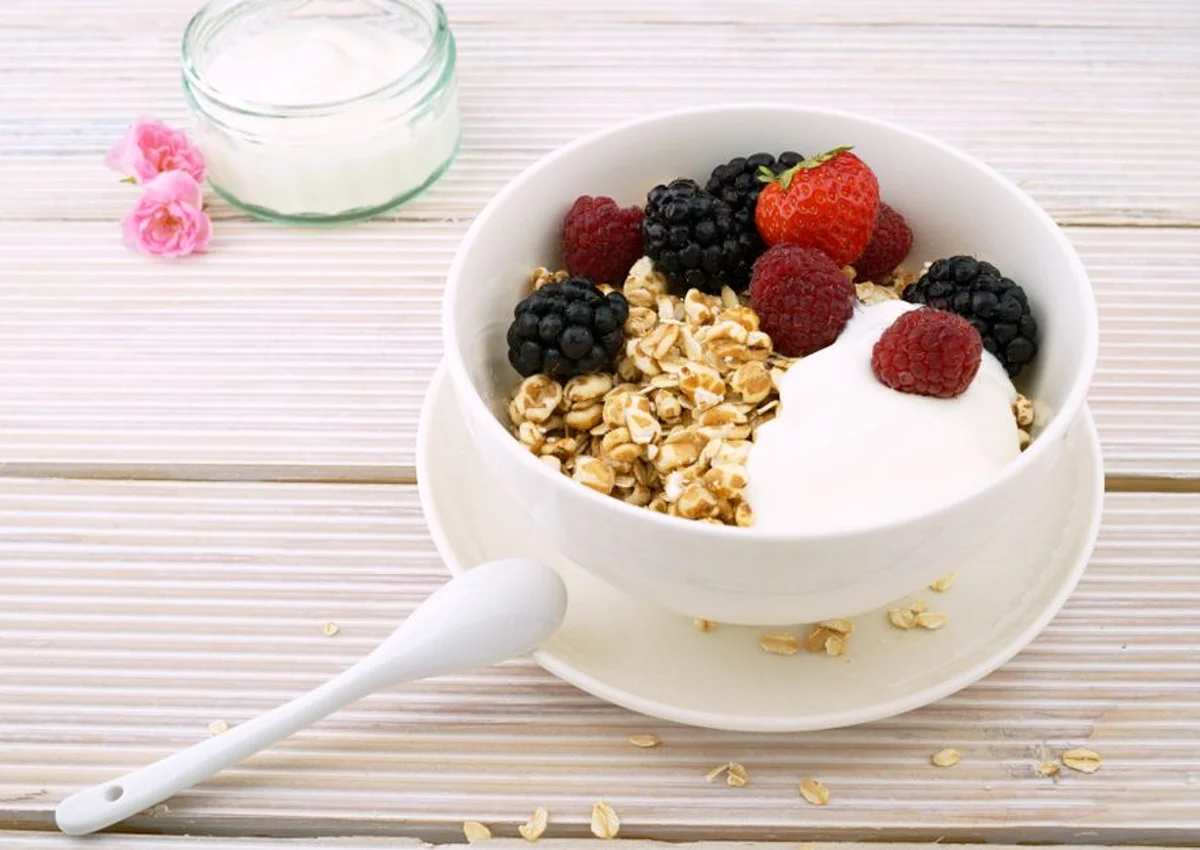
3. Yogurt bowl with berries and almonds: the no-cook option
Top plain yogurt, or a suitable alternative, with ½ cup raspberries and ½ ounce / about 14 g chopped almonds. That fruit-and-nut topping supplies about 5.8 g fiber: 4 + 1.75, rounded. It is not a measured total for every yogurt bowl.
Do not assume yogurt adds fiber; check the label. For a nut allergy, leave almonds out and choose a safe topping. If you also want to compare protein options, see our high-protein breakfasts for busy mornings.
4. Beans on toast or in a wrap: the savory option
Warm ½ cup cooked black beans, mash lightly, and season to taste. Serve on toast or in a whole-grain wrap with vegetables; an egg is optional. The beans alone supply about 7.5 g fiber before the bread, wrap, or vegetables.
Use ready-cooked canned beans, drained and prepared as directed, or properly cooked dried beans. Do not use uncooked dried beans. Compare canned labels because generic cooked-bean values are not an exact match for every product.
5. Overnight oats with banana and chia: the prep-ahead option
Use your usual overnight-oat recipe with sufficient liquid, then stir in chia so it hydrates. Start with a small amount if seeds are new to you. Add banana when serving. Keep a perishable oat mixture refrigerated; follow your ingredients’ storage instructions.
One smaller topping example: ½ medium banana contributes about 1.6 g, and ½ tablespoon chia about 2.05 g, totaling roughly 3.7 g before the oats. The base’s fiber depends on your oat portion and label. Chia is optional; no ingredient is essential.
Choose your breakfast by the problem you need to solve
- No cooking time: yogurt with fruit, or toast plus a pear.
- Prefer savory: beans on toast or a bean-and-egg wrap.
- Need it ready ahead: refrigerated overnight oats; add fruit at serving.
- Watching the grocery bill: compare store-brand oats, seasonal fruit, frozen berries, and canned beans per usable portion. Our budget grocery list can help you plan ingredient reuse.
- Do not like seeds: skip them. Fruit, beans, and whole grains offer other routes.
Download the free breakfast fiber matrix to choose one base and one add-on. It includes blank spaces for your own food labels so the comparison matches what you buy.
How do I increase fiber without making breakfast uncomfortable?
Add fiber gradually rather than changing every meal overnight. NIDDK advises increasing fiber a little at a time and drinking enough liquids. Choose a smaller portion if needed, and follow any personalized advice about fluids or diet.
- Keep your usual breakfast base.
- Add one manageable portion, such as some berries or part of a pear.
- Notice how you feel over the following days before increasing it again.
If symptoms persist, do not keep adding seeds or supplements. A clinician or registered dietitian can help with ongoing digestive problems or a prescribed restricted-fiber diet. For a separate discussion of bowel symptoms, read our guide to fiber foods and constipation; this article focuses on breakfast choices.
Common questions about high-fiber breakfasts
How much fiber should breakfast have?
There is no single breakfast target for everyone. Consider your whole day, appetite, usual intake, and individual needs. Use the portion table to make a useful change—not to force the largest possible number into one meal.
Are eggs or yogurt high in fiber?
Plain eggs and dairy yogurt are not meaningful fiber sources. They can be part of breakfast, but fruit, beans, whole grains, nuts, and seeds are the ingredients that add fiber. Some packaged yogurts include added fiber; read their labels.
Can I make these gluten-free or dairy-free?
Yes: use suitable labeled gluten-free oats or bread when needed, and a dairy-free alternative you tolerate. Bean-and-fruit options do not require dairy. Check allergen labels and cross-contact information for your own requirements.
Is a smoothie the same as juice?
A smoothie made from whole fruit retains its fiber, unlike juice with the pulp removed. Its fiber amount still depends on ingredients and portions. You do not need a smoothie to use the ideas here.
Start tomorrow: choose one breakfast above, buy only the missing ingredient, and use the portion you comfortably enjoy.
Sources checked October 2026: USDA/HHS fiber portions (August 2024 reference; generic composition, not product testing); NIDDK gradual fiber changes; CDC food-based fiber ideas. Original combinations and matrix: Purpleflow. Illustrative photos via Pexels: thea a, Life Of Pix. Diagram: Purpleflow.
Purpleflow publishes informational content, not personal medical advice. See our wellness disclaimer and editorial policy.