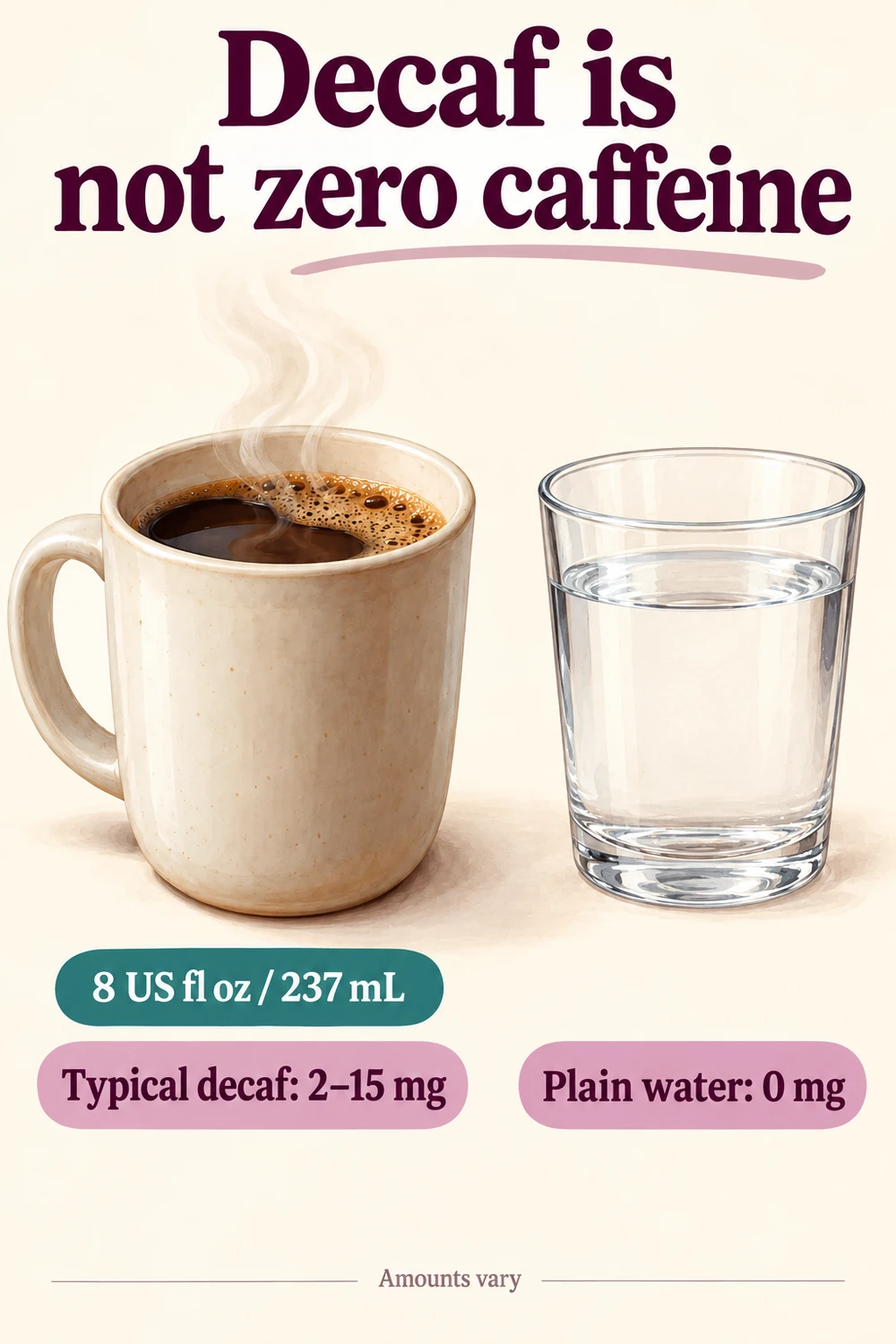
Caffeine in decaf coffee is usually low, but it is not zero. The FDA gives a typical range of 2–15 milligrams for an 8-US-fluid-ounce cup, about 237 mL. That range is a starting point, not a guarantee for your brand, café order or mug.
The useful next step is to identify the drink and serving before comparing numbers. A large decaf latte, a small filter coffee and an espresso shot are not interchangeable units. This guide shows what to check, what you can calculate and when an honest “unknown” is the best answer.
How much caffeine in decaf coffee is typical?
The FDA’s consumer guide to caffeine supplies the 2–15 mg figure for an 8-US-fl-oz cup. It also makes clear that decaffeinated drinks still contain caffeine. Do not extend that range to every espresso shot or every ready-to-drink bottle.
For example, a product may state its amount per serving, per 100 mL or per capsule. First copy the unit exactly. Then check whether the serving matches what you actually drink. Keep a stated range as a range; replacing it with a single precise number creates certainty the source did not provide.
Start with the cup size
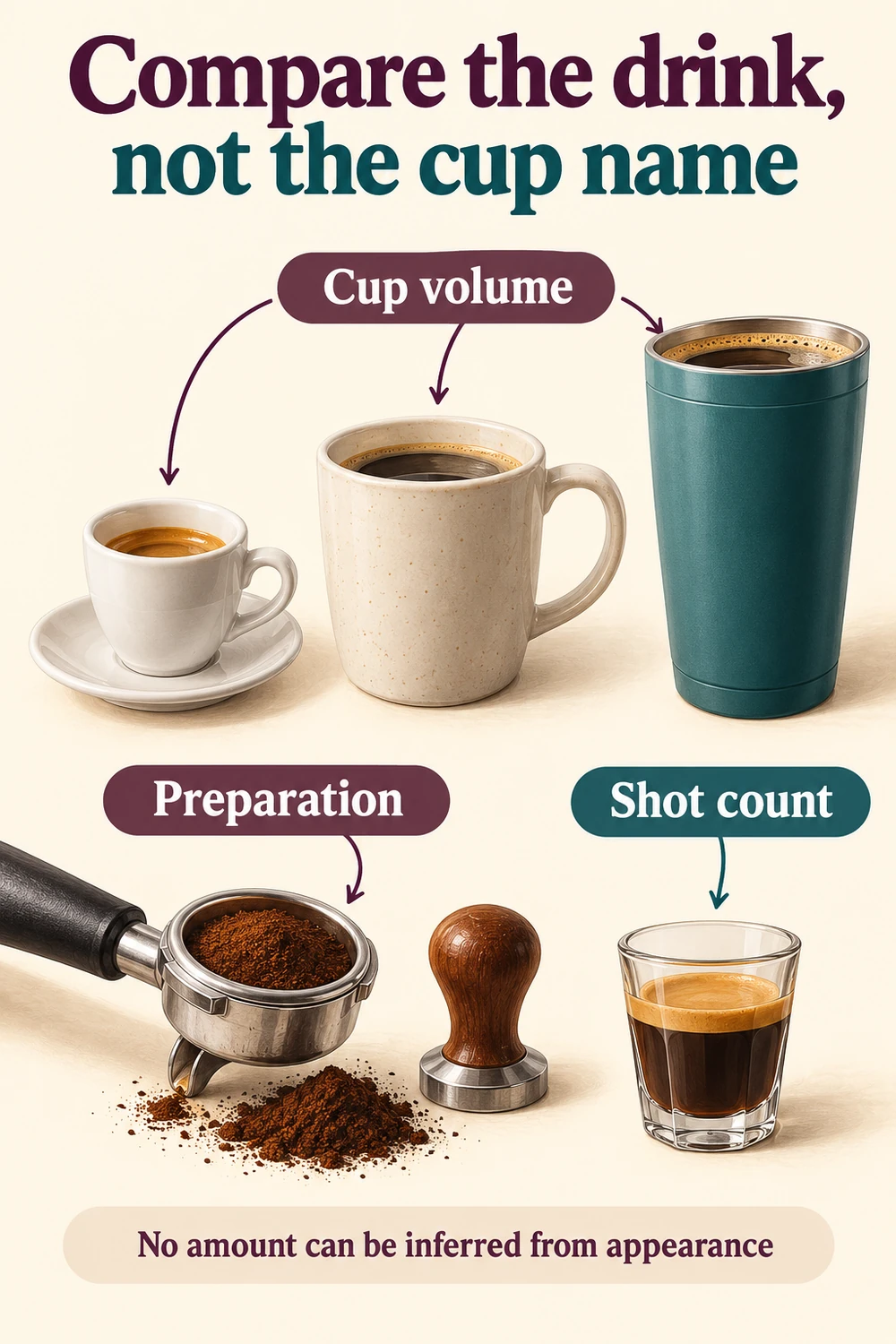
“One cup” can mean a measuring cup, a household mug or a café size name. Those descriptions do not establish the same volume. Use the manufacturer’s serving volume or measure the liquid capacity you normally fill. Remember that US fluid ounces measure volume, while ounces on a kitchen scale measure weight.
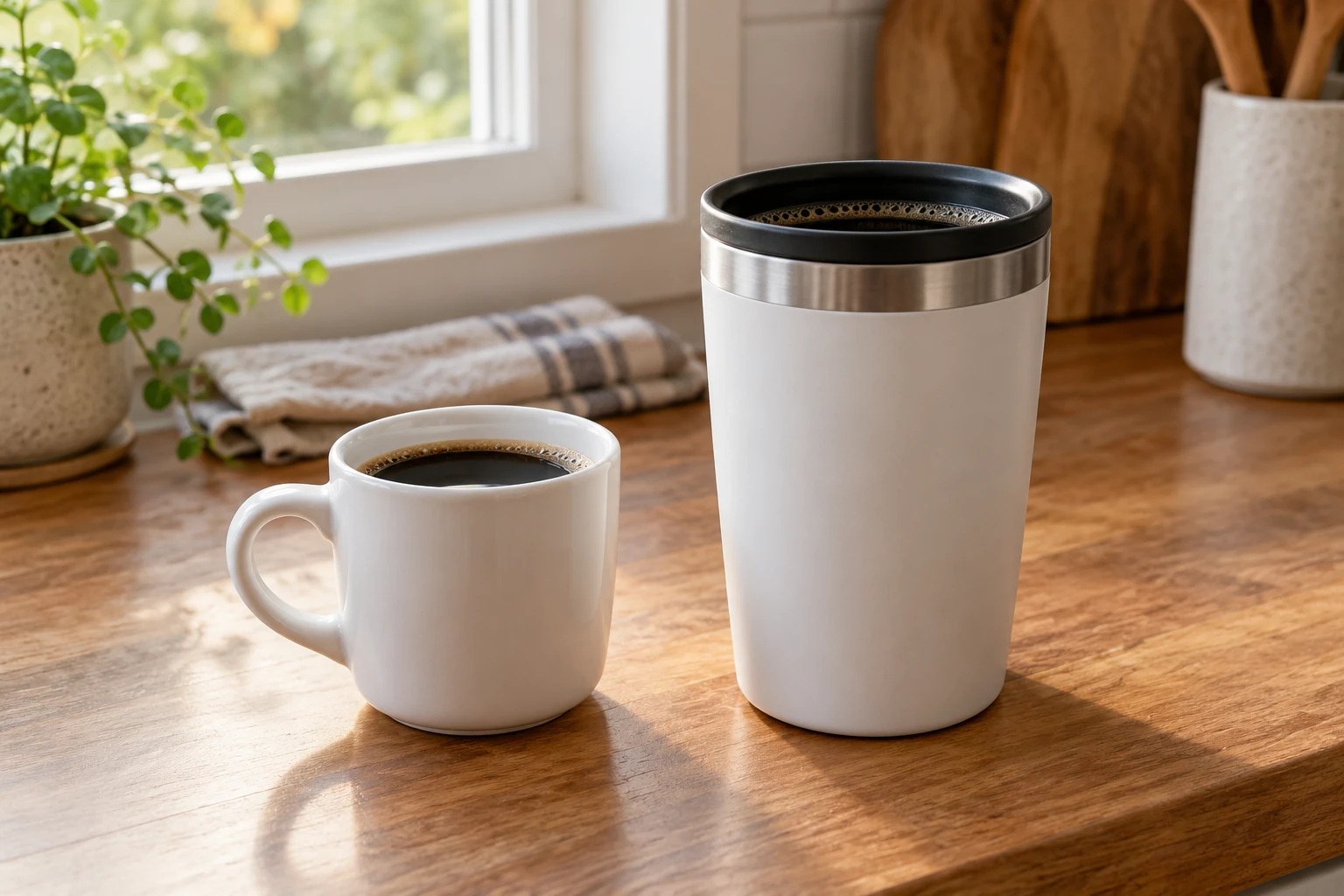
A bigger serving of the same prepared coffee generally contains more caffeine because it contains more of that drink. However, comparing different brewers or brands needs more information. A darker-looking coffee is not a caffeine meter, and a stronger flavor does not supply a usable milligram value.
Use simple arithmetic only when the inputs are known
Suppose a hypothetical prepared drink contains 4 mg per 100 mL. A 200 mL serving then contains 8 mg, while 300 mL contains 12 mg. The calculation is caffeine per 100 mL × serving mL ÷ 100. These are teaching numbers, not measurements of a real product.
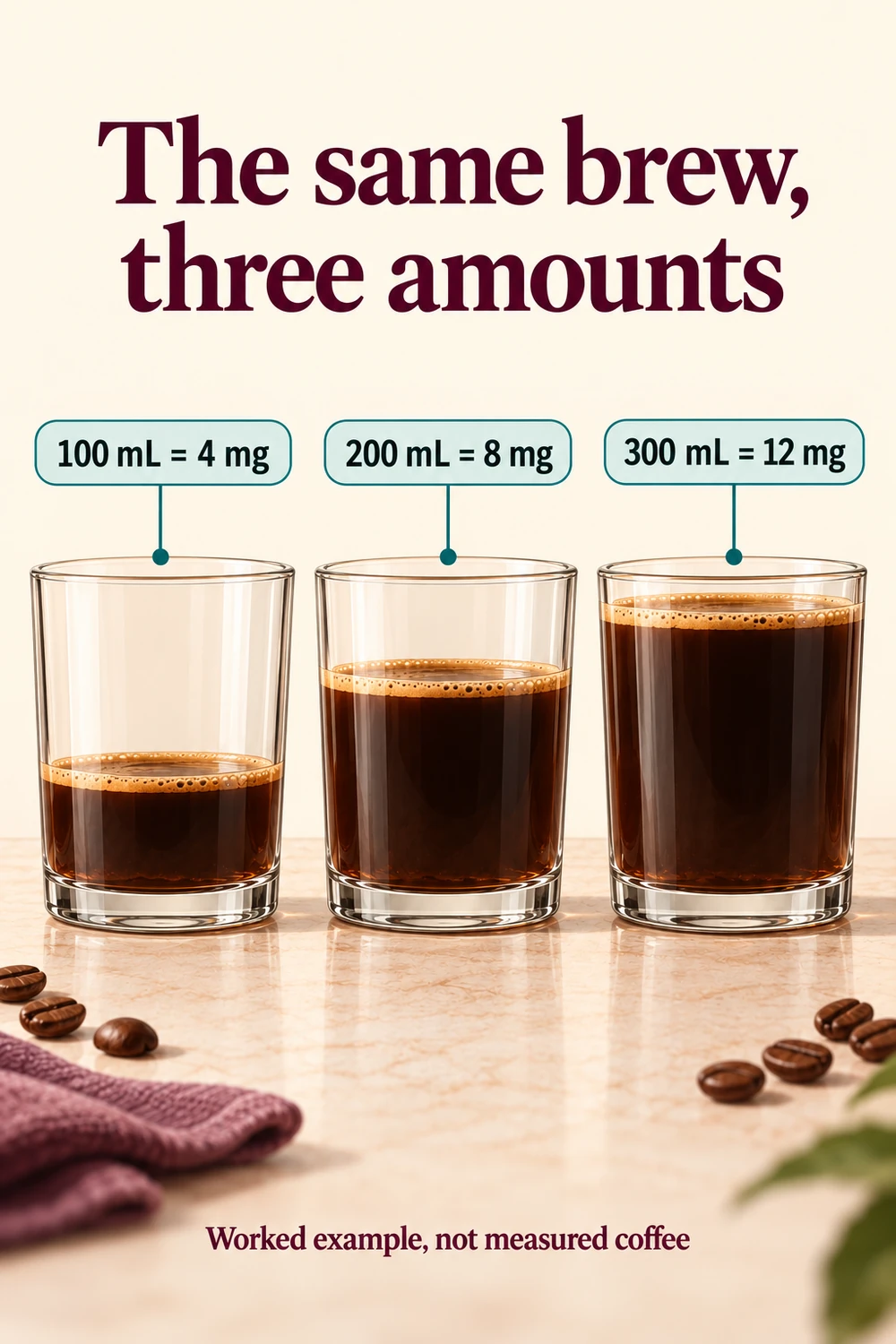
Only scale a figure this way when it describes the same prepared drink. Do not multiply an espresso figure by the size of a latte. Milk and water change the final volume, but the coffee shots and any other caffeinated ingredients determine the caffeine entering the drink.
Read a decaf label in four passes
Look for the product name, serving definition, caffeine statement and preparation directions. A value for a capsule might depend on a particular brew setting. An instant-coffee value might refer to a measured amount of powder. Consequently, the most useful comparison records both the amount and how it was prepared.
If the package has no caffeine quantity, check the manufacturer’s current information for that exact product. Save the page or date with your notes. Similar names, pack colors and product ranges can hide different formulations. When information is absent, write “amount not supplied” rather than treating a missing number as zero.
What to ask when ordering decaf coffee
At a café, specify that every coffee shot should be decaf. Then confirm the size and shot count. Also check additions such as chocolate, tea or another coffee component. A drink can contain decaf espresso without being caffeine-free overall.
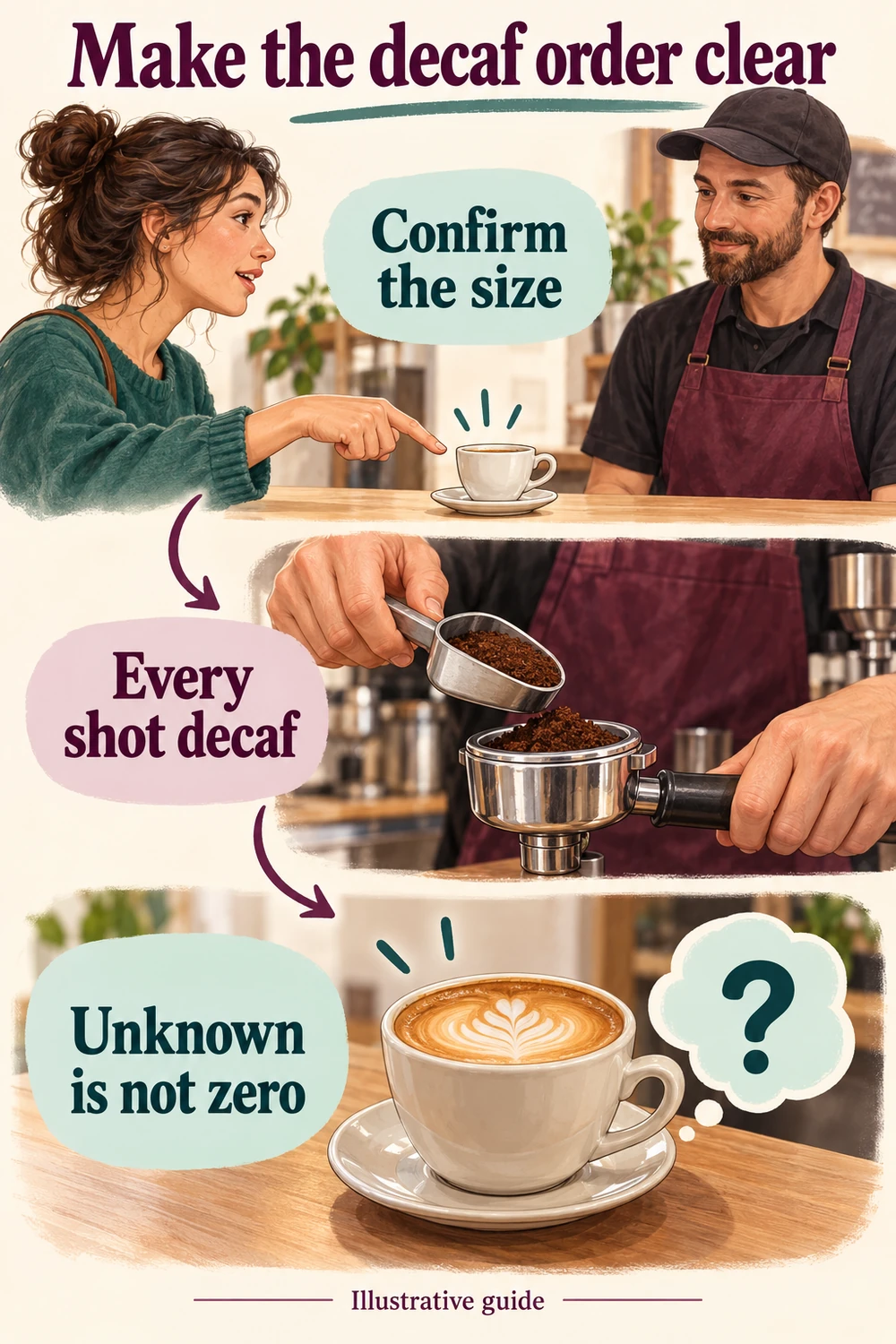
A practical question is: “Do you have caffeine information for this exact decaf drink and size?” If the café cannot provide it, you can still choose a smaller serving or a different drink. You simply cannot turn the missing information into a reliable personal total.
Record preparation instead of judging by appearance
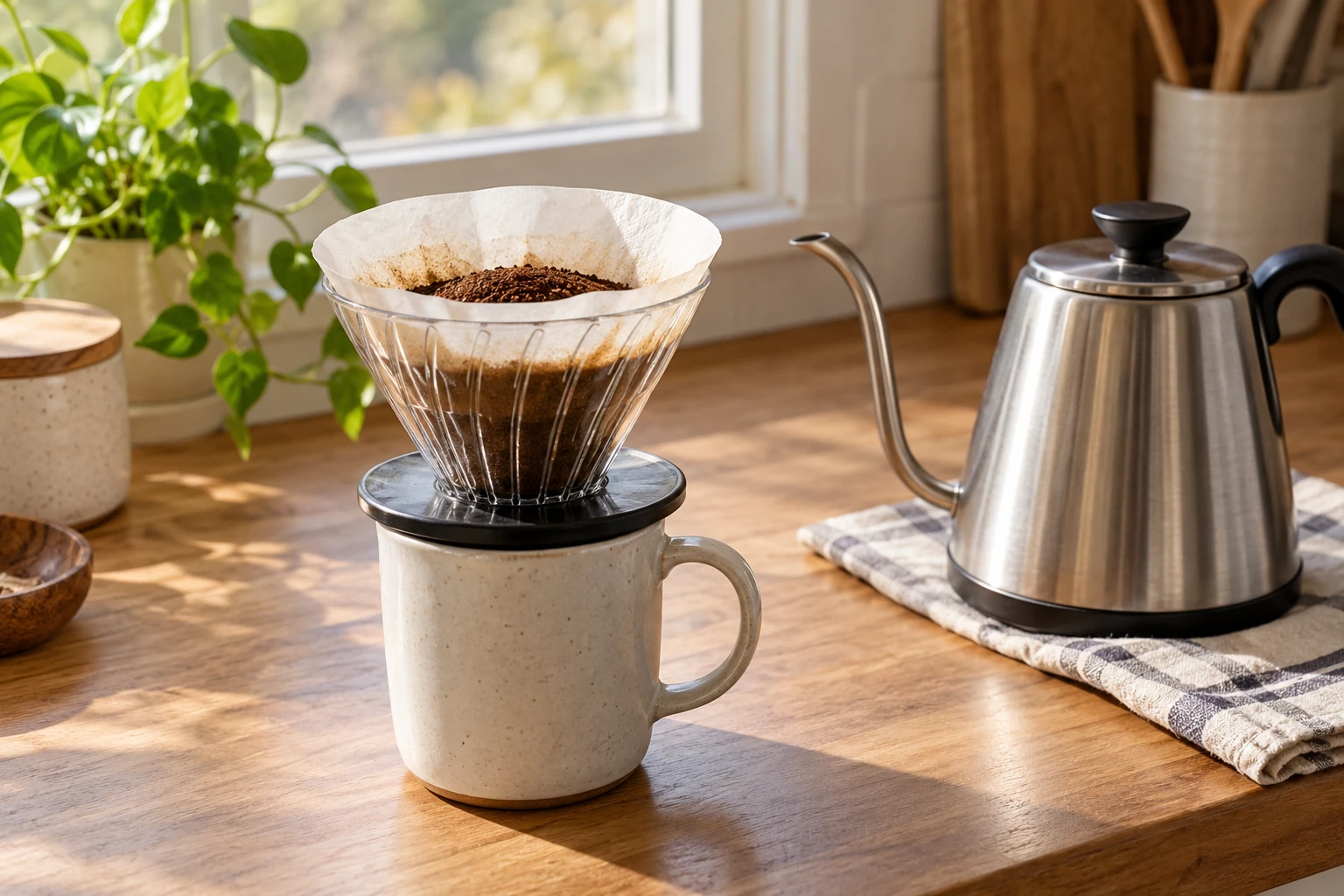
For home coffee, note the product, amount of coffee used, brewer and finished serving. This makes your next comparison more consistent. If flavor is the problem, use our coffee-to-water ratio guide to work on the recipe separately.
You may also find our sour and bitter coffee troubleshooting guide helpful when choosing one brewing change at a time. Neither a good-tasting brew nor a bitter one tells you its caffeine content. Keep taste notes and caffeine information in separate columns.
Do process names reveal the caffeine in decaf coffee?
A decaffeination process describes how a product was made; it does not, by itself, give you an exact amount in your finished cup. Likewise, claims about origin, organic production or roast level answer different questions. Use a serving-specific figure when one exists.
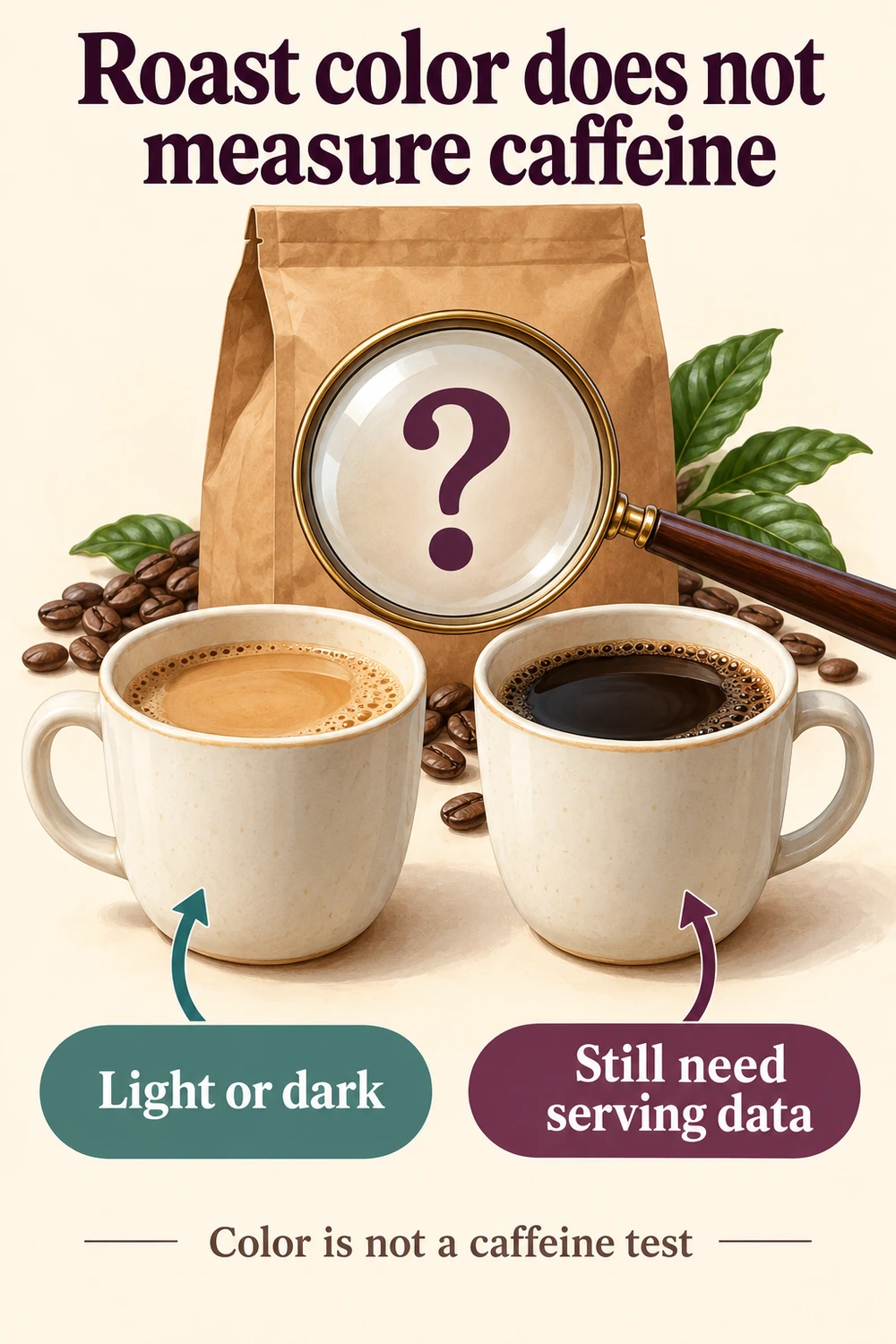
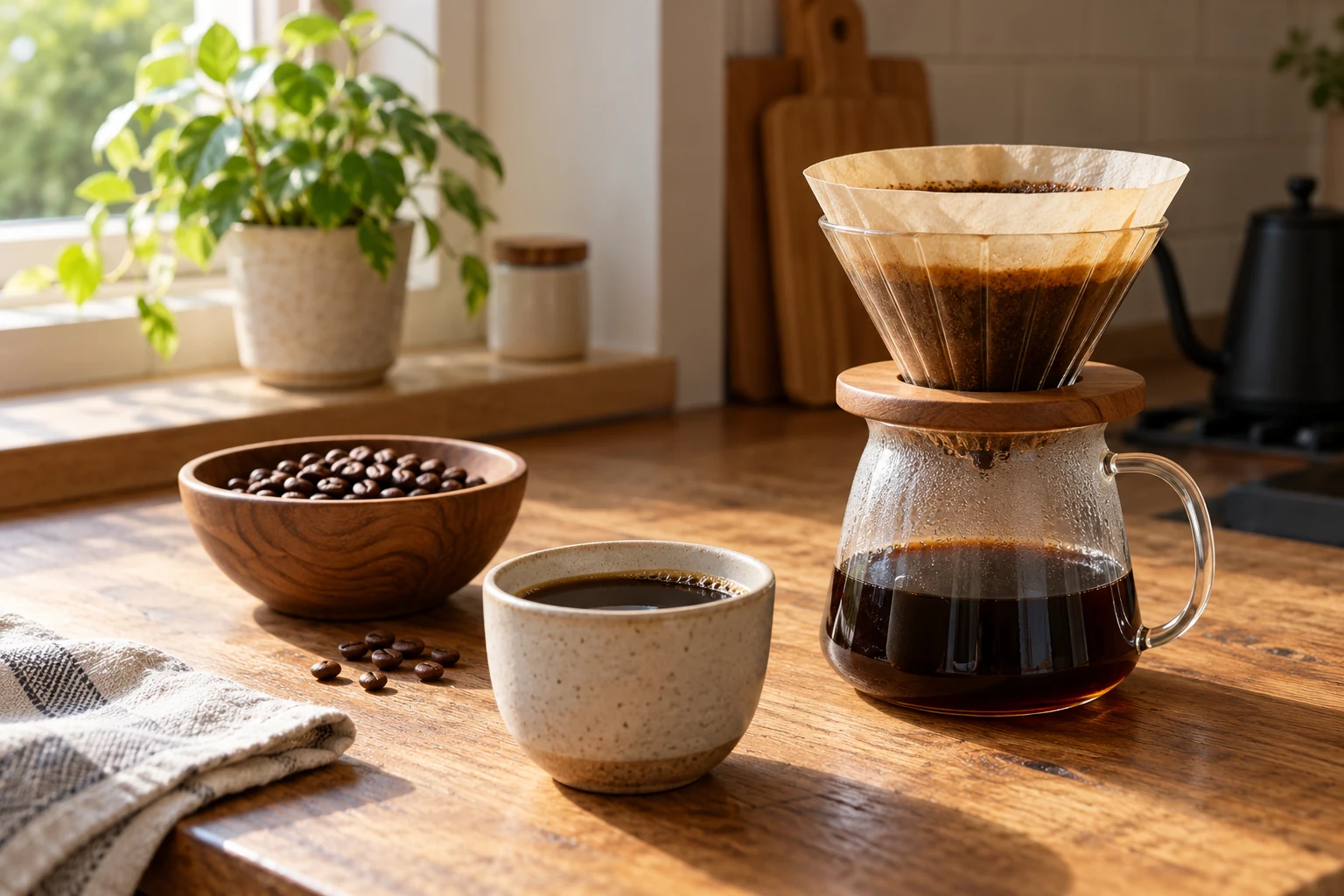
Avoid treating “97% removed,” where a supplier uses that wording, as “3 mg per cup.” A percentage needs a starting quantity and a defined basis. Without those details, that conversion does not work. You also cannot infer a precise value from the appearance of the beans in an editorial photograph.
Add repeated servings, not just the first cup
Small amounts can add together. In an illustrative day, two decaf servings labeled 8 mg each contribute 16 mg. Adding a tea labeled 25 mg gives 41 mg overall. This example teaches addition; it is neither a recommended intake nor a prediction for your drinks.
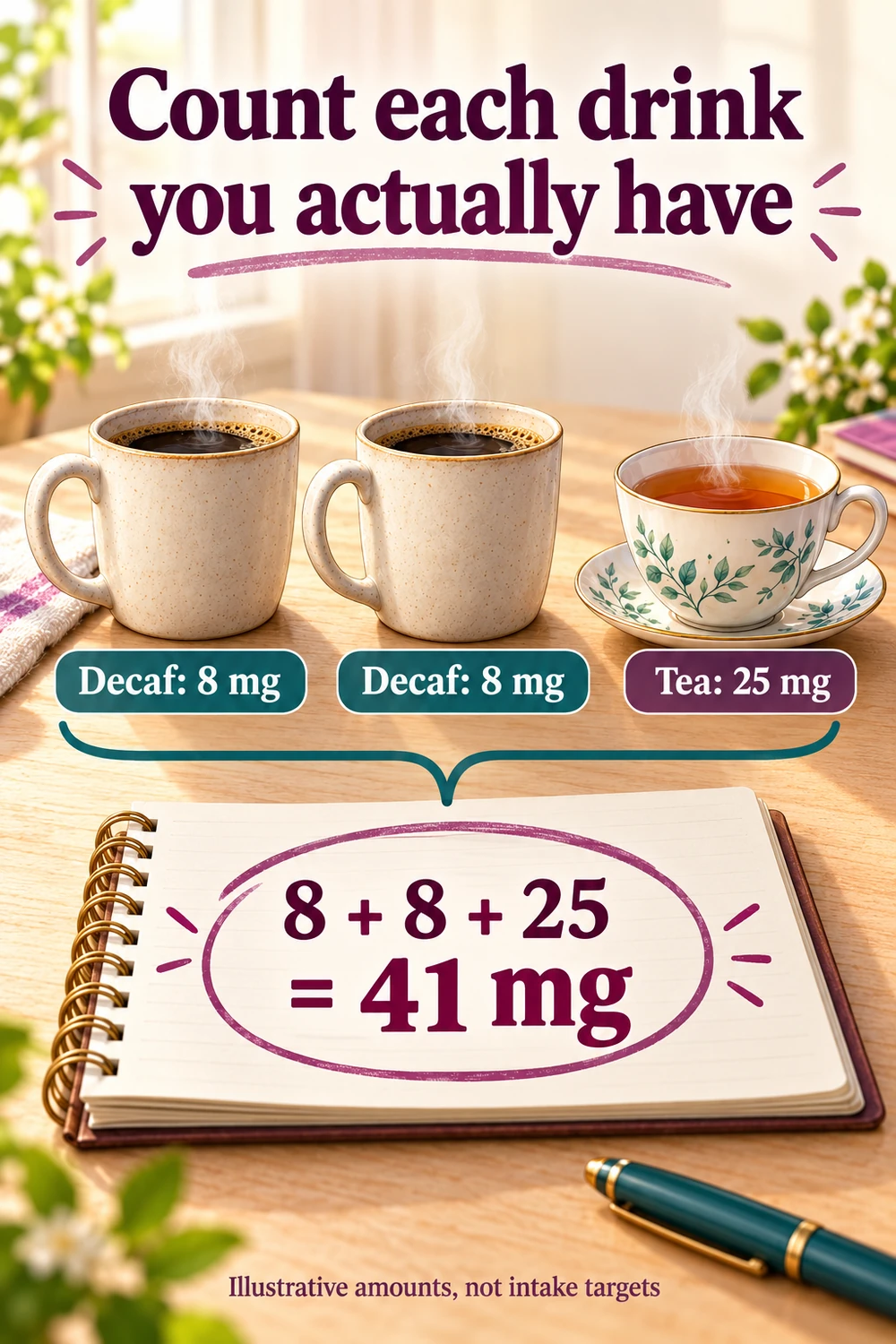
Keep unknowns visible in the tally. A total based on two known products and one unknown café drink is a partial total. For broader context, see our guide to caffeine amounts and individual limits. A general adult limit does not override personal medical advice.
Choose according to your actual goal
If you want less caffeine while keeping coffee flavor, decaf can be a useful option. For complete avoidance, check a genuinely caffeine-free alternative. Where a clinician has advised a restriction, ask what information and limits matter for your situation.
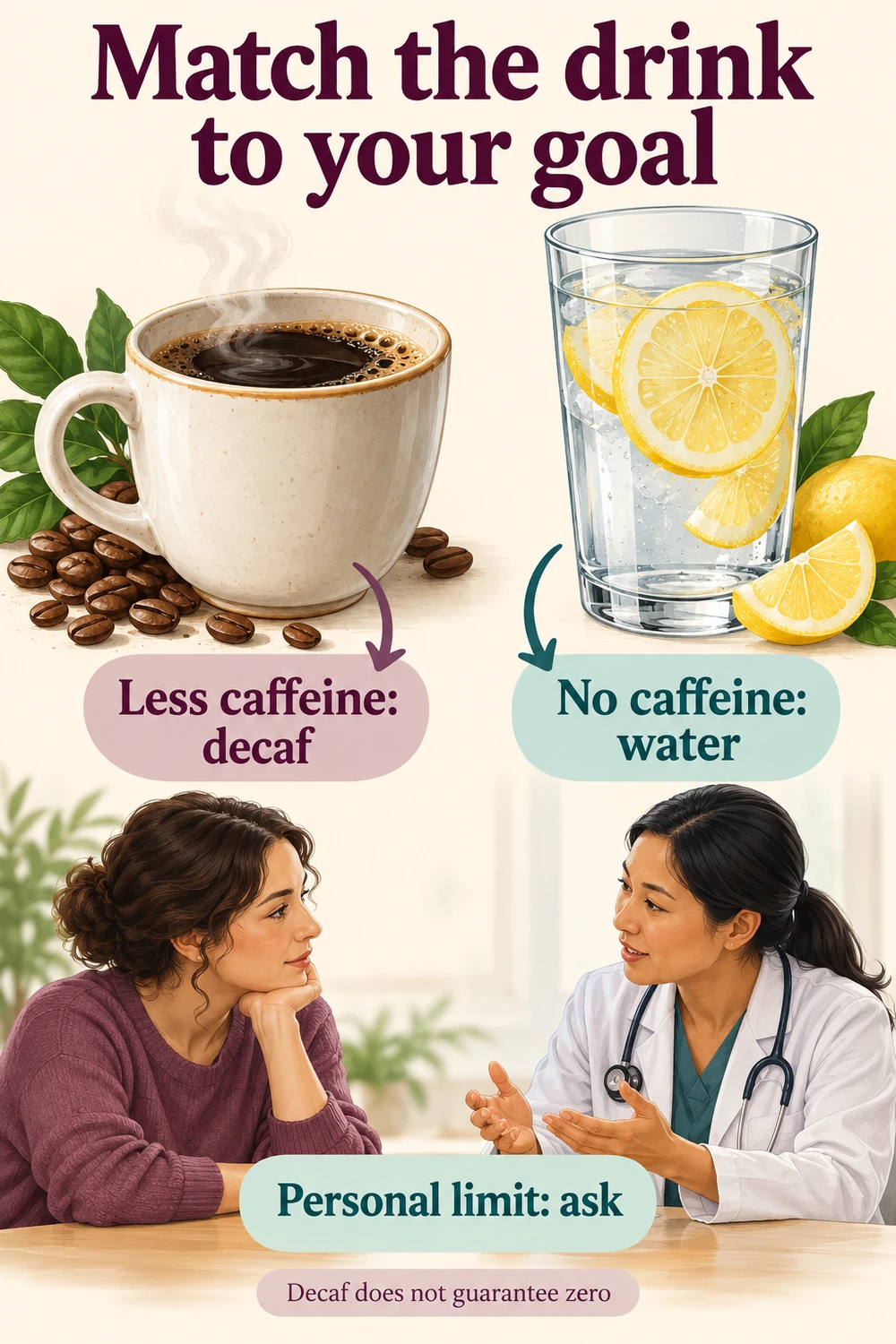
If you are exploring a possible sleep connection, record drink timing alongside how you sleep. DailyFact’s guide to sleep tracking and its limits explains why a consumer score cannot settle the cause of a symptom. A record can support a conversation; it does not diagnose a caffeine problem.
Questions about caffeine in decaf coffee
Is decaf the same as caffeine-free?
No. Decaf contains less caffeine, but it can still contain some. Check the exact drink when a zero-caffeine choice matters.
Does adding water remove caffeine?
No. Adding water dilutes the drink but does not remove caffeine already in it. Drinking only part of a well-mixed serving reduces the amount consumed.
Can I use the same figure for every café?
No. Use information for the specific product, preparation and serving. Keep estimates labeled and leave unavailable amounts unknown.
Source checked October 23, 2026. Photos are AI-generated editorial illustrations; they are not product tests or caffeine measurements. Worked examples are explicitly hypothetical.
Purpleflow publishes informational content, not personal medical advice. See our wellness disclaimer and editorial policy.