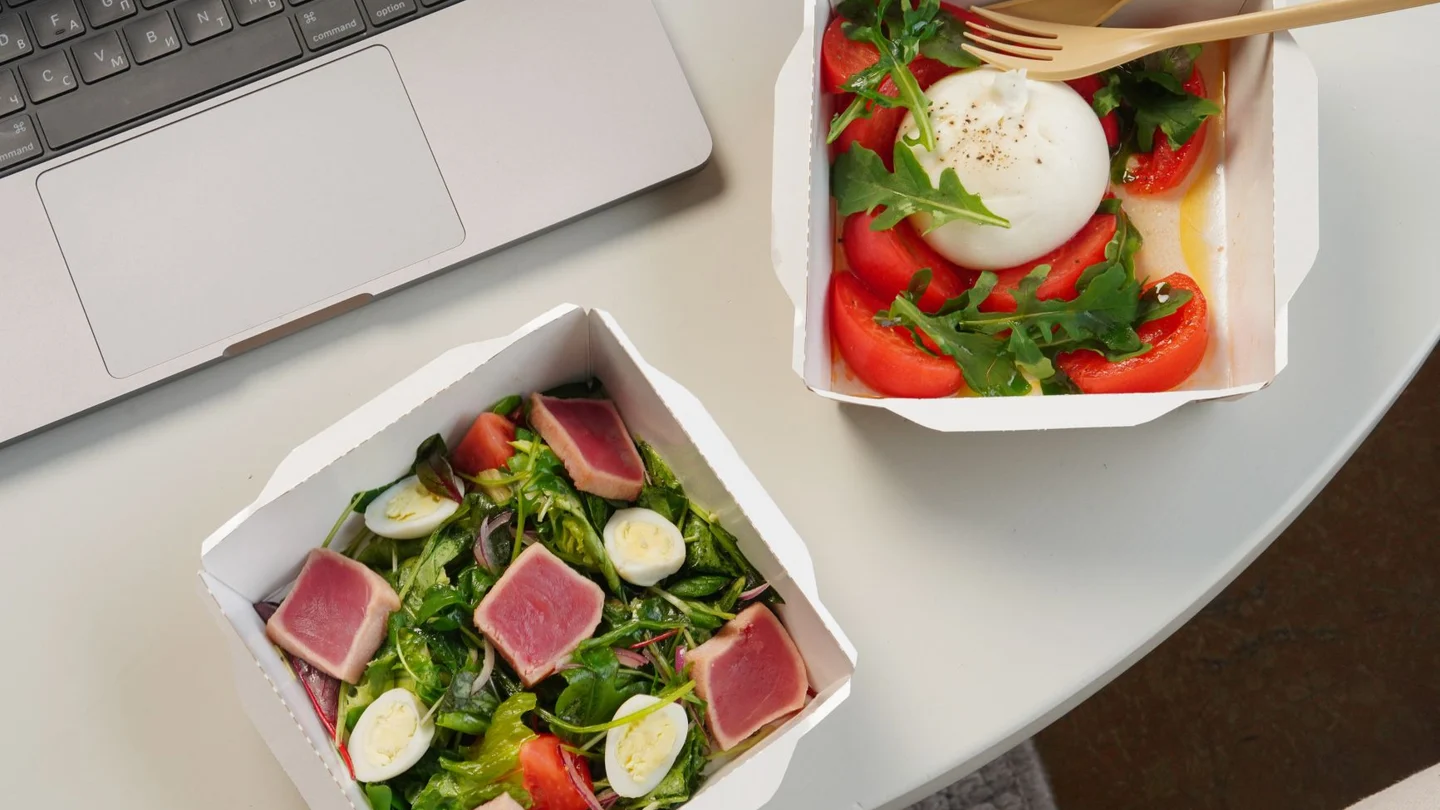
A lunch can be satisfying without being hot. If your workplace has no microwave, build a meal around food you enjoy cold: beans, cooked eggs, tofu, chicken, canned fish or plain Greek yogurt. Add vegetables, something starchy and a dressing or seasoning, then pack it safely.
The important distinction: no microwave does not mean no refrigeration. A cooked chicken wrap, egg salad or yogurt bowl still needs to stay cold until you eat it. The six formulas below are for a chilled lunch, with a separate shelf-stable option when you cannot keep food cold.
Six cold lunch formulas, with transparent protein estimates
These are mix-and-match ideas, not tested recipes. The totals are arithmetic examples using representative label inputs, not laboratory nutrition analyses or a promise that every brand provides the same amount. Use the portion and protein on your actual pack. Bread, vegetables and other additions are excluded unless stated.
To recalculate a weighed ingredient: grams eaten ÷ label serving grams × label protein grams. For example, if a tofu label lists 10 g protein per 100 g, 150 g supplies 15 g. A different tofu label can produce a very different total. The FDA explains how to read serving sizes and nutrient amounts.
| Cold meal | Example protein calculation | What to add |
|---|---|---|
| Tuna + chickpea salad | 75 g drained tuna at 24 g/100 g = 18 g; 100 g drained chickpeas at 7 g/100 g = 7 g. Total: 25 g. | Tomato, cucumber, lemon dressing and bread. |
| Egg + bean wrap | 2 cooked eggs at 6 g each = 12 g; 100 g drained beans at 7 g/100 g = 7 g. Total: 19 g before the wrap. | Shredded cabbage, a wrap and your preferred sauce. |
| Tofu + edamame box | 150 g tofu at 10 g/100 g = 15 g; 75 g cooked shelled edamame at 12 g/100 g = 9 g. Total: 24 g. | Chilled noodles or rice, cucumber and dressing. |
| Greek yogurt + savory sides | 170 g plain Greek yogurt with 17 g per portion; 2 bread slices with 4 g each = 8 g. Total: 25 g. | Carrot sticks, cucumber, herbs and fruit. |
| Lentil + feta grain salad | 150 g cooked lentils at 8 g/100 g = 12 g; 40 g feta at 15 g/100 g = 6 g. Total: 18 g before grains. | A chilled grain, peppers and a lemon dressing. |
| Chicken + hummus wrap | 75 g cooked chicken at 28 g/100 g = 21 g; 40 g hummus at 7.5 g/100 g = 3 g. Total: 24 g before the wrap. | Leafy greens, grated carrot and a wrap. |
On a phone, swipe sideways to read the full table. These assumed label values illustrate the calculation, not a particular manufacturer’s product. All six prepared meals need chilling.
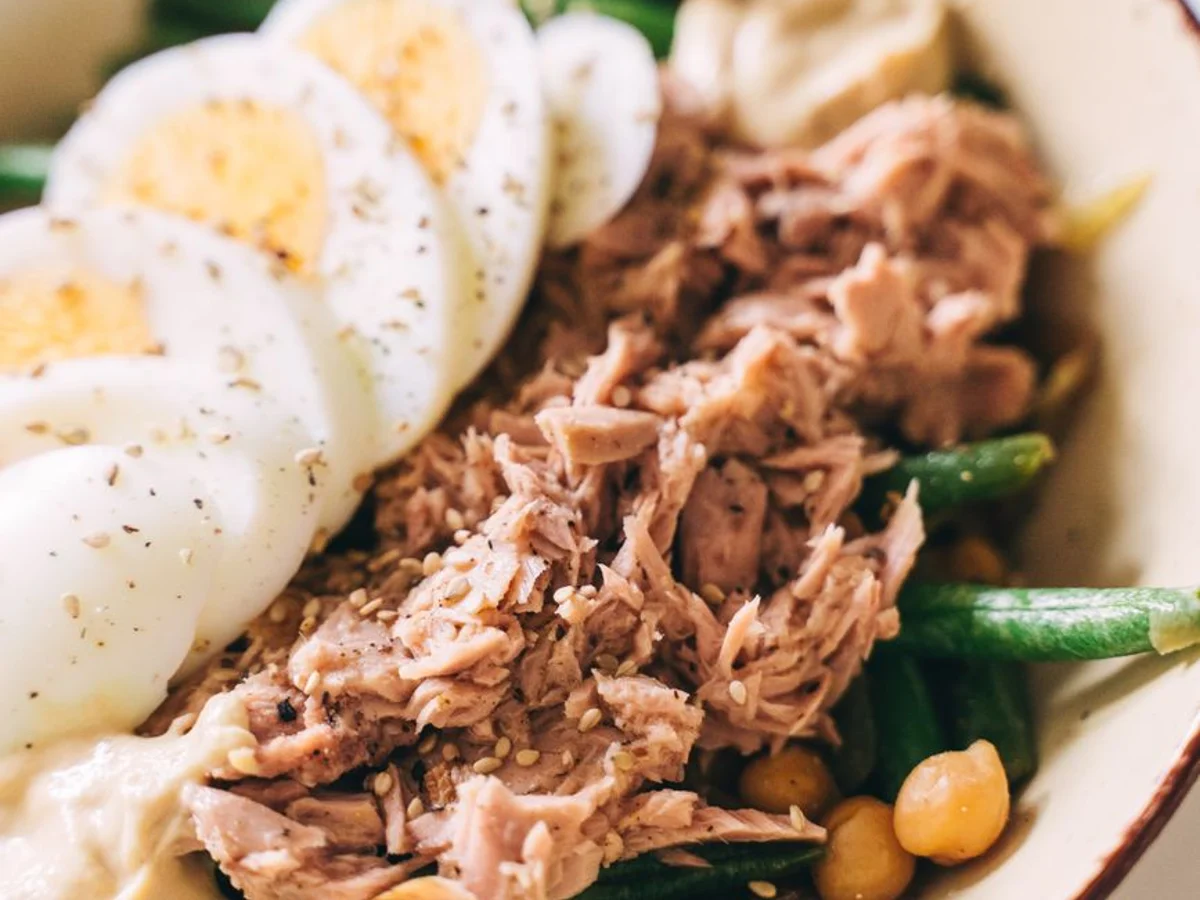
1. Tuna and chickpea salad: fast to assemble
Drain the tuna and chickpeas, then mix them with chopped vegetables and a little lemon juice or dressing. Keep bread separate if you prefer it crisp. Canned chickpeas are convenient; properly cooked dried chickpeas can work too, but compare the nutrition of the cooked amount, not the dry weight.
Choose a fish you like and vary your choices rather than relying on tuna every day. For pregnancy, breastfeeding or children’s meals, use the FDA’s fish-choice guidance. Once a can or pouch is opened and mixed into salad, its contents are not a shelf-stable packed lunch.
2. Egg and bean wrap: use the wrap as a container
Slice cooked eggs and add drained beans, cabbage and a little dressing. Mash some beans if loose pieces make the wrap difficult to eat. Put the filling in a separate tub when packing the night before, then assemble at lunchtime to avoid soggy bread.
A mayonnaise-free egg lunch is not automatically safe at room temperature. The cooked eggs and prepared beans still need appropriate refrigeration. Swap the wrap for a grain salad if it packs more easily for you.
3. Tofu and edamame box: a plant-based option
Use a tofu product suitable for eating as prepared, following its label; cook it first if required. Combine with cooked, cooled shelled edamame and vegetables. Follow the edamame pack’s cooking directions rather than assuming frozen beans are ready to eat.
Tofu protein values vary substantially by firmness and brand. We use 10 g per 100 g as an example input, not a universal tofu figure. If soy is unsuitable for you, use another formula instead of forcing a substitute that does not meet your needs.
4. Greek yogurt with savory sides: lunch need not be a sandwich
Pack plain Greek yogurt with herbs or seasoning as a dip. Add bread, vegetables and fruit in separate compartments. A sweet version can use oats and fruit instead, but those ingredients change the example protein calculation.
Check the label: regular yogurt, Greek-style yogurt and strained Greek yogurt may have different protein amounts. Choose a portion that works for you. A cooler with yogurt, bread and vegetables can be more useful than a complicated recipe you will not prepare.
5. Lentil and feta salad: make the texture work cold
Use cooked lentils that hold their shape, add feta and chopped vegetables, and season to taste. A chilled grain can make the meal more filling; it does not have to be counted as a protein anchor to be worthwhile.
Cooked grains and lentils need prompt cooling and cold storage. Do not leave a warm pot on the counter for hours before packing. If preparing ahead, follow the ingredient labels and applicable leftover-storage guidance, and freeze portions you will not use promptly.
6. Chicken and hummus wrap: a leftovers option
Use properly cooked, chilled chicken with hummus and vegetables. Keep the filling cold, and assemble close to eating if the wrap gets soggy. Do not use this plan to extend the safe life of old leftovers.
The calculation excludes the wrap because sizes and labels vary. If you want a whole-meal total, add each ingredient’s contribution, including the wrap and any other substantial additions.
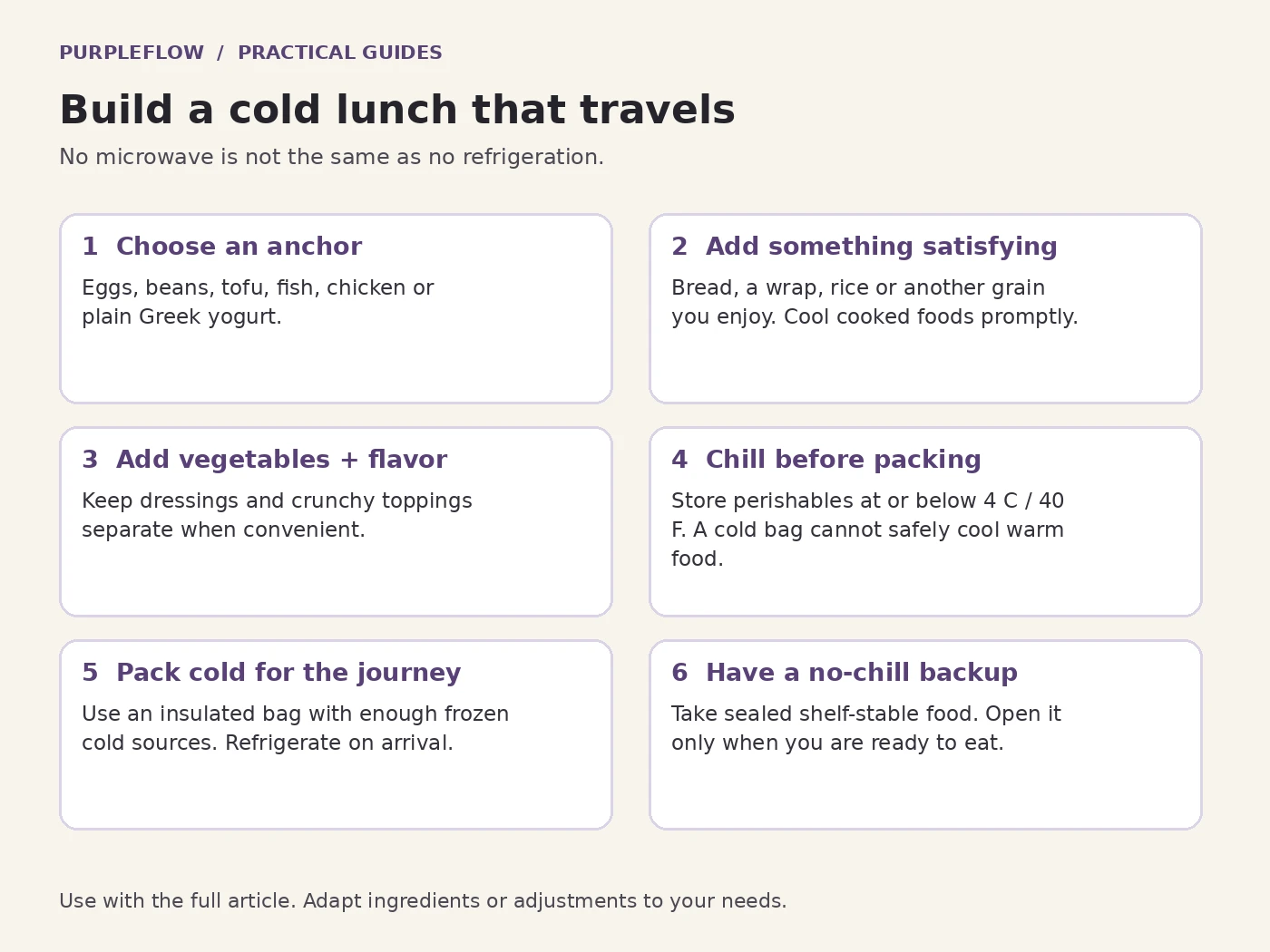
Pack a lunch that stays cold, not just one that starts cold
The FDA’s food-storage guidance recommends keeping refrigerated foods at or below 40°F / 4°C. Perishable food should not sit at room temperature longer than two hours, or one hour when the air temperature is above 90°F / about 32°C. Count time without adequate chilling across the journey and lunch break; it is not a fresh allowance at each stop.
- Chill first: prepare food with clean hands and utensils, cool cooked ingredients promptly, and refrigerate before packing.
- Use an insulated bag with adequate frozen cold sources: arrange them around the meal, keep the bag closed and out of direct sun. The right amount depends on the bag, journey and weather; an insulated bag alone does not guarantee a safe temperature.
- Refrigerate on arrival when possible: use the workplace refrigerator instead of leaving the lunch on your desk.
- Check your actual setup: a suitable thermometer can help establish whether food stays cold. Do not rely on whether a bag still feels cool.
- Plan leftovers: if you cannot refrigerate uneaten perishables safely, do not save them for later. Smell and appearance cannot reliably prove safety.
What if there is no refrigerator and no reliable way to chill food?
Use foods labelled shelf-stable while still sealed, and open them only when ready to eat. One option is an unopened single-serving bean or fish pouch, whole-grain crackers, an intact piece of fruit and a separate shelf-stable nut or seed portion if suitable for you. Check each product’s storage directions; not every pouch or carton is shelf-stable.
Bring a clean utensil, choose quantities you can finish and do not keep opened leftovers without appropriate refrigeration. This is a different packing strategy from making tuna salad at home and carrying it warm all morning.
Make your next workday easier
Choose two formulas, not six. Buy ingredients you can use in other meals, prepare only what you can store safely, and keep dressings or crunchy toppings separate when it improves the texture. Our cheap protein comparison can help with label and cost calculations. For variety, see more work-lunch ideas and practical work snacks.
Download the free cold-lunch grid and packing checklist (PDF). It includes the same six example calculations and a packing reminder. No email signup or purchase is required.
Common questions
Do I need 25 grams of protein at lunch?
No single amount is right for everybody. The totals above help compare ingredients; they are not a personal intake target. Needs depend on the person and the rest of the diet. If a medical condition affects your food choices, use individualized advice.
Can I make these vegan?
The tofu-edamame formula is plant-based if the remaining ingredients and dressing are too. A lentil salad without feta or a bean wrap without eggs can also work, but recalculate the protein rather than keeping the original total.
Can I pack rice cold?
Yes, if it was prepared, cooled and stored safely. “Cold lunch” describes serving temperature; it is not permission to leave cooked rice or other perishable foods unrefrigerated.
Do I need a special lunch box?
You need containers that close securely and an effective way to keep perishables cold. Start with equipment you already have. Buying a particular bag is not a substitute for checking temperature and following storage guidance.
Your first lunch
Pick one protein anchor, add a grain or bread and vegetables, check the actual labels, and choose a packing method that keeps the meal cold. The useful lunch is the one you can prepare, transport safely and enjoy—not the one with the biggest advertised protein number.
Sources reviewed October 13, 2026: FDA Nutrition Facts label guidance, food-storage guidance and fish-choice advice linked above. Protein totals are illustrative label-based calculations; no branded food testing or clinical review is claimed. Illustrative photos via Pexels: Nadin Sh, Alesia Kozik. Diagram: Purpleflow.
Purpleflow publishes informational content, not personal medical advice. See our wellness disclaimer and editorial policy.