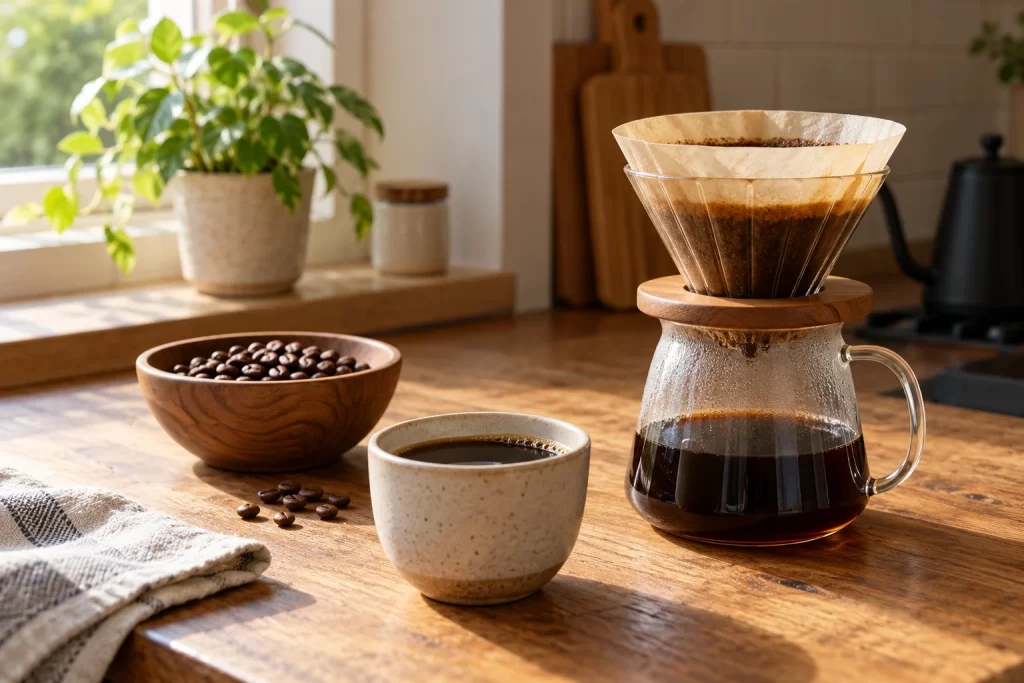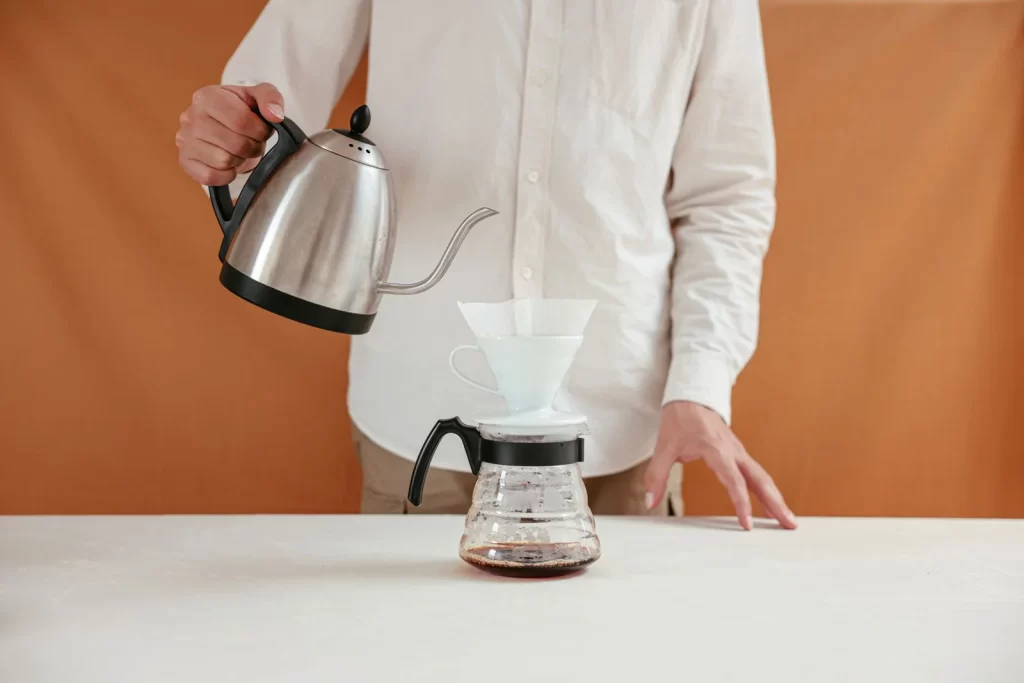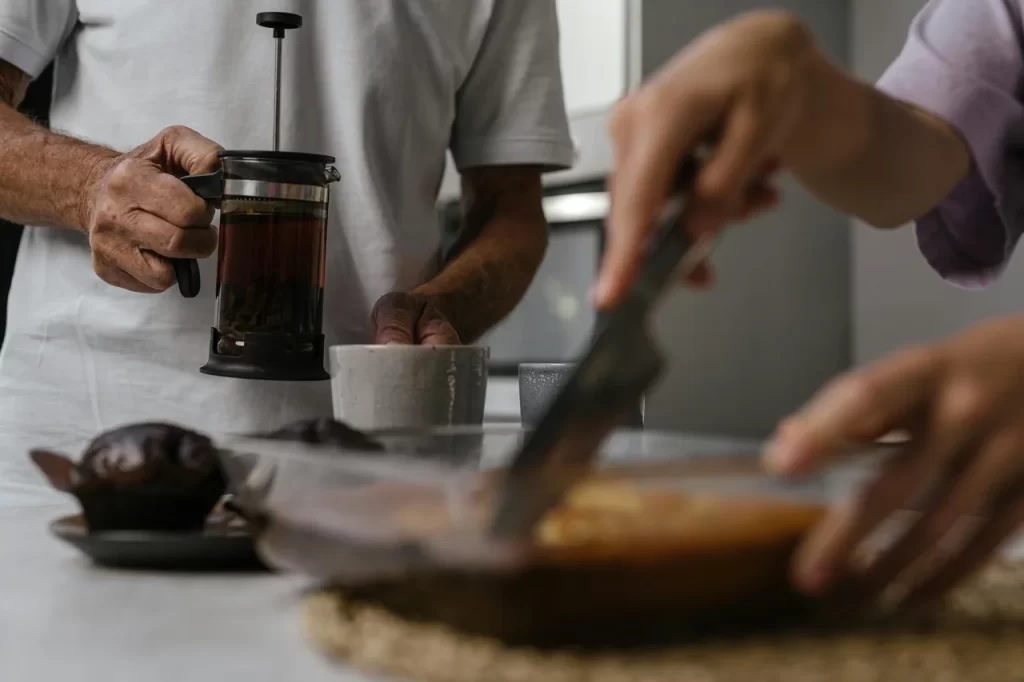
If coffee tastes sour or bitter, resist changing the beans, grind, dose and water all at once. Start with a repeatable recipe, describe what bothers you, then try one small adjustment on the next brew. That gives you useful information even when the first experiment does not improve the cup.
A sharp, thin cup may benefit from a finer-grind test; a drying cup with unusually slow flow may benefit from a coarser-grind test. Those are starting experiments, not universal diagnoses. Roast, water, uneven brewing and your own preferences can create similar flavors.
This guide focuses on hot filter coffee and French press. Espresso involves different flow, pressure and beverage-yield considerations, so do not apply the example recipes directly to an espresso machine.
First separate flavor from strength
Strength describes the concentration of the drink. Extraction describes what brewing removes from the grounds. They are related, but a strong cup is not automatically over-extracted, and a weak cup is not automatically under-extracted.
Try a simple test: dilute a small sample of the finished coffee with a little hot water. If the flavor is pleasant but was too intense, concentration may be the main issue. If you still dislike its sharpness, dryness or roast flavor, dilution has not identified or fixed the brewing cause.
A cup can also have enjoyable fruity acidity. If a coffee tastes bright but balanced and you like it, there may be nothing to repair. If it tastes aggressively sharp, thin and short-lived, that gives you a different clue. Barista Hustle’s extraction guide discusses these sensory distinctions, including the fact that bitterness alone is not a reliable diagnosis.
Build a baseline before touching the grinder
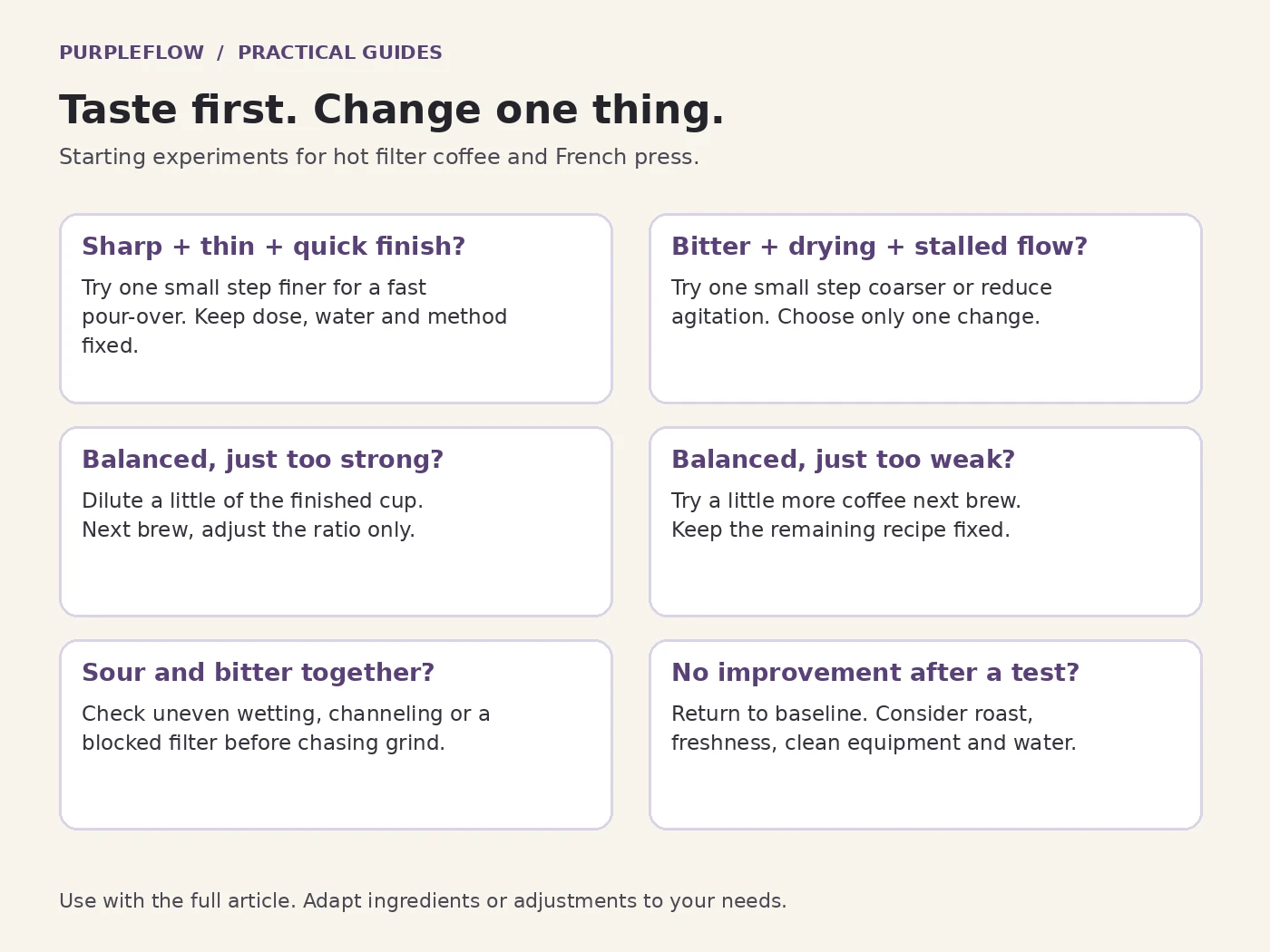
Use the same coffee, brewer, filter and water for the first two brews. For a simple hot-filter baseline, try 20 g coffee with 320 g water added, a 1:16 input ratio. This is a starting recipe, not a universal optimum. Our coffee-to-water ratio chart explains scaling, cup sizes and why water added differs from finished beverage volume.
- Measure dose and water. Include bloom water in the total. If you have no scale, use the same level scoop and measured water amount each time, recognizing that it is less precise.
- Start with a grind appropriate to the brewer. A pour-over and a French press need not share the same setting.
- Keep the method repeatable. Use similar pouring height, water temperature and agitation. Do not change your pouring style and grind on the same test.
- Record the result. Note approximate contact or drain time, then taste once the coffee is cool enough to sip comfortably. Compare cups at similar temperatures.
Do not force a cup you enjoy to meet an arbitrary brew time. Timing is a useful observation, not a pass/fail score.
When coffee tastes sharp, sour and thin
If a pour-over drains much faster than your usual successful brew and tastes sharply sour with little sweetness, try one small step finer next time. Keep the dose, water and pouring method fixed. A finer grind commonly increases contact and extraction, but how much it changes the cup depends on the grinder and brewer.
For French press, you can instead test a slightly longer steep while keeping grind and ingredients unchanged. Choose one approach for the experiment; do not extend the steep and grind finer together.
If the cup already drains slowly, or tastes both sour and drying, stop assuming the solution must be “finer.” Check uneven wetting, a blocked filter or channeling first. A light roast can be naturally acidic, and water composition can affect how the flavor comes across.
When coffee tastes bitter, drying or harsh
If a pour-over stalls and the coffee feels drying or harsh, try one small step coarser with the same recipe. Alternatively, test gentler pouring or less agitation—but select only one change. Fine particles and disturbed grounds can slow flow in some brewers.
Bitterness without dryness is less specific. A dark roast can bring prominent roasted or bitter flavors even when extraction is consistent. If a careful brewing adjustment does not help, try a different roast before buying equipment.
For French press, you might test a shorter steep or a coarser grind, one at a time. Decant the drink rather than leaving it sitting on the grounds indefinitely. Suspended particles can affect mouthfeel; that is not the same thing as dissolved coffee strength.
A one-variable troubleshooting table
| What you notice | Try on the next brew | Keep fixed |
|---|---|---|
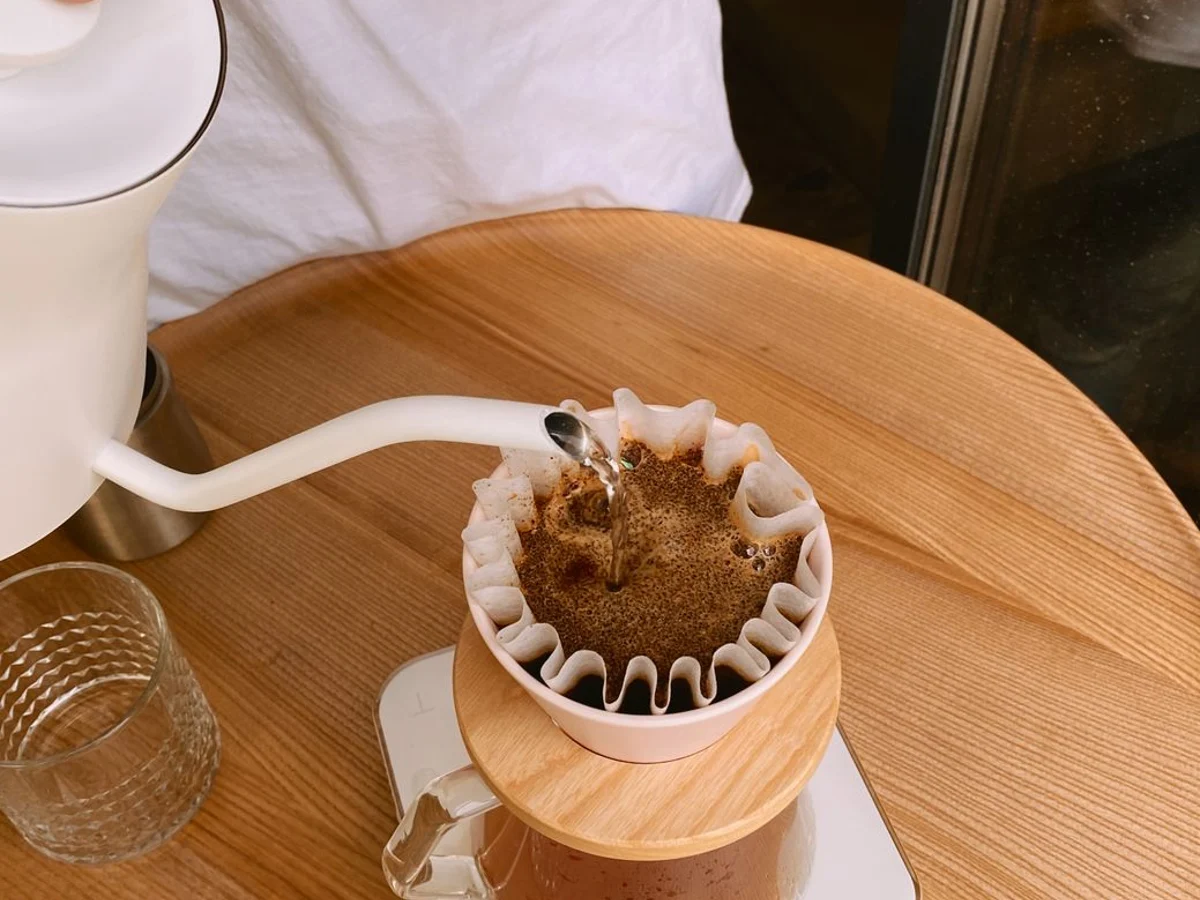
| Sharp, thin, quick-draining pour-over | One small grind step finer. | Coffee, dose, water amount, temperature and pouring method. |
| Drying, harsh, unusually slow pour-over | One small grind step coarser. | The same remaining recipe. |
| Balanced flavor, too concentrated | Try a little more water relative to coffee, such as 1:17 instead of 1:16. | Grind and method; note that ratio changes can also affect extraction. |
| Balanced flavor, too diluted | Try a little more coffee relative to water, such as 1:15 instead of 1:16. | Grind and method; keep the batch within brewer capacity. |
| Sour and bitter in the same cup | Check filter fit and wetting; try more even wetting before changing grind. | Dose, water and grind for that test. |
| Persistent roast bitterness despite repeatable brewing | Compare a less dark roast. | Use the same baseline recipe for the comparison. |
On a phone, swipe sideways to read the full table. Different brewers and coffees can respond differently; taste the test rather than treating the table as a guarantee.
Why a cup can taste sour and bitter at the same time
Water does not always pass through a coffee bed evenly. Some grounds may receive more contact than others, while a channel lets water bypass part of the bed. A single cup can therefore contain flavors that do not fit a neat “under or over” label.
Check that the filter sits properly, the dry bed is reasonably level and the grounds become evenly wet. Avoid frantic stirring or pouring that digs a deep hole in one area. Do not add several extra steps at once: make the setup consistent, then test one adjustment.
An uneven grind can complicate flow, but this does not mean you immediately need a new grinder. Use the equipment you have for a controlled baseline first.
Do not overlook water, beans and clean equipment
If your controlled tests do not help, return to the baseline and check the ingredients and equipment. Use drinking water whose plain taste you enjoy. If it has an obvious unwanted odor or taste, compare another suitable water while leaving the coffee recipe unchanged. Follow the brewer’s instructions for water quality and descaling; this article does not prescribe a mineral recipe.
Check how the beans were stored and whether stale coffee or a roast you dislike is the underlying problem. Clean the brewer, filter holder and carafe according to the manufacturer’s instructions. Old coffee residues can add unwanted flavors, and a clogged filter or dirty equipment can affect flow.
Water temperature is another variable, but keep it stable for your initial grind tests. The right temperature can depend on the coffee, brewer and recipe. Follow the equipment’s instructions and use heat-safe tools; changing temperature, grind and ratio together makes it hard to learn from the result.
An example: two brews, one useful conclusion
Suppose your pour-over uses 20 g coffee, 320 g water and the same pouring method each morning. Today it drains quickly and tastes sharp and thin. Record the result, then make tomorrow’s brew one small grind step finer, leaving everything else fixed.
If the flavor becomes sweeter and more balanced, keep that setting. If it becomes drying and flow stalls, reverse the change or try a smaller adjustment. If little changes, return to baseline and investigate another factor rather than stacking more changes on top.
This is an illustrative experiment, not a report of Purpleflow testing a particular grinder or bean. The point is that both improvement and a failed trial tell you something when the rest of the recipe stays consistent.
Free troubleshooting sheet and brew log
Download the coffee troubleshooting grid and brew log (PDF). Use it to record beans, brewer, water, dose, grind, time, flavor and the single change for your next cup. No signup or purchase is required.
If you are choosing a method, our French press versus pour-over guide explains the practical differences. For scaling your recipe, keep the ratio chart nearby rather than guessing from a machine’s cup markings.
Common questions
Does sour coffee always mean under-extraction?
No. Sharpness with low sweetness and a short finish can be a useful clue, but roast, water and uneven extraction matter too. Pleasant fruit-like acidity is not necessarily a problem.
Does bitter coffee always need a coarser grind?
No. Consider dryness and flow as well as bitterness. A darker roast or stale residues can taste bitter even when changing the grind does little.
Can milk or sugar fix the brew?
They can make the drink more enjoyable if you prefer them, but they do not diagnose the cause. Taste a small plain sample first when you want to learn what to change.
Should I buy a new grinder?
Not as the first step. A consistent dose, repeatable method, clean brewer and a few logged experiments can improve your understanding without a purchase. Consider equipment only after identifying a limitation that matters to you.
Your next cup
Make a baseline you can repeat. Name the specific flavor or texture you dislike, choose one small test, and record whether the result is better. A cup you enjoy is the goal—not proving that every sour or bitter note has one universal cause.
Source reviewed October 13, 2026: Barista Hustle, Coffee Extraction and How to Taste It. Troubleshooting steps are practical starting experiments, not product-testing claims. Illustrative photos via Pexels: Anna Tukhfatullina Food Photographer/Stylist, Valeriya Kobzar. Diagram: Purpleflow.
Purpleflow publishes informational content, not personal medical advice. See our wellness disclaimer and editorial policy.