Bad weather, a busy evening or a small apartment does not have to rule out a walking break. An indoor walking workout without a treadmill can be as simple as alternating a gentle march with a few controlled steps around a clear patch of floor.
Start with the five-minute option below. It includes one minute to ease in, three minutes of simple movement and one minute to slow down. No jumping, equipment or step target is required. If five minutes is too much, shorten it; a routine should fit your current ability, not the other way around.
This is a flexible movement plan for generally healthy adults, not a rehabilitation prescription. Adapt the movements and pace to your space, balance and comfort.
What counts as indoor walking?
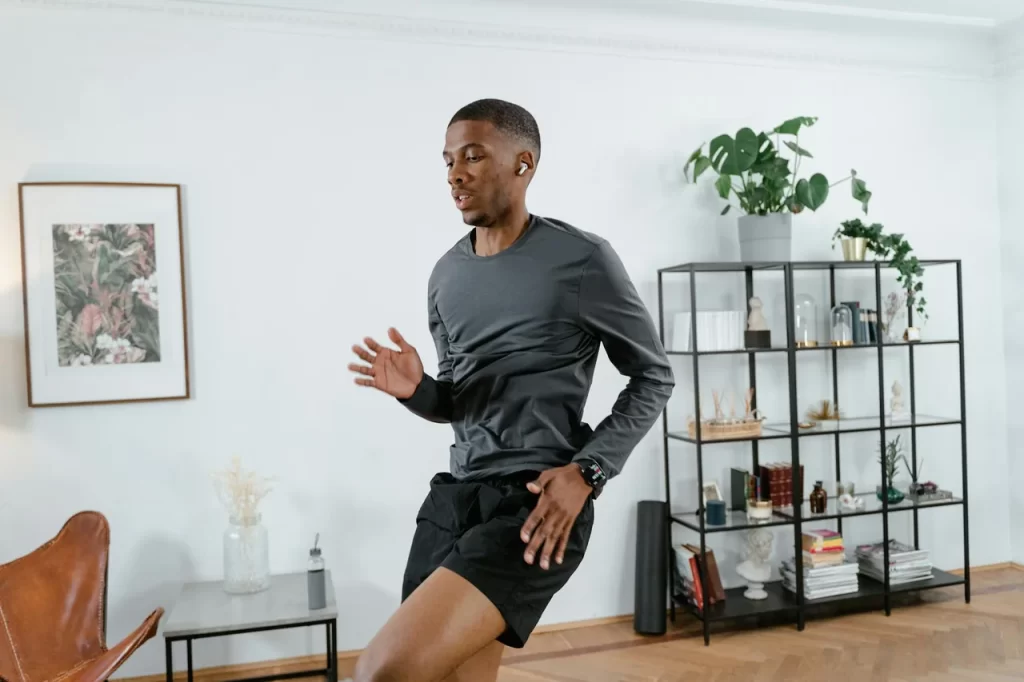
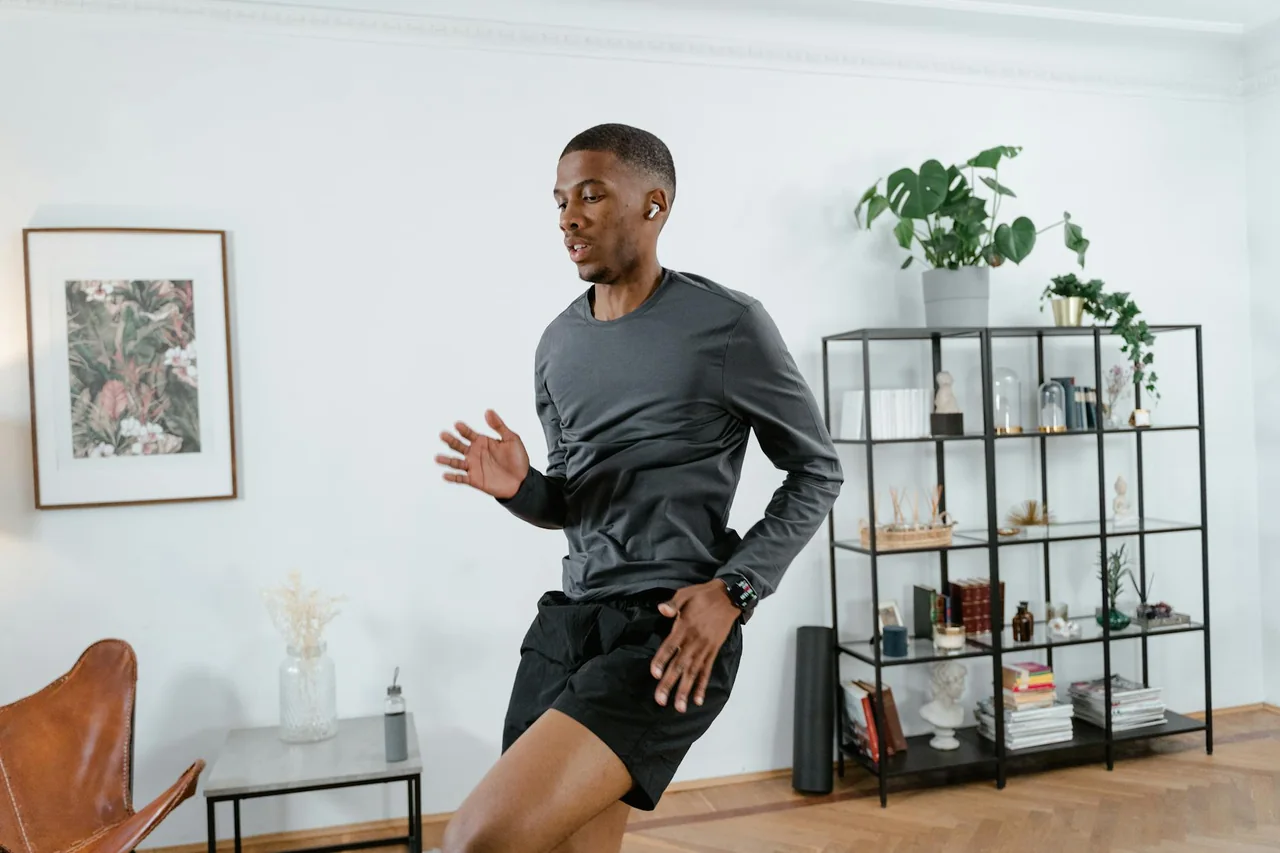
You can walk along a clear hallway, make a small loop around a room, or march in place when there is no safe route. Here, “march” means alternating your feet in a walking rhythm with a comfortable, low lift—not running with high knees.
Moving indoors can be a useful way to break up sitting. It does not automatically become moderate-intensity exercise just because a timer is running. If you are strolling gently, count it as an easy movement break. If your pace makes you breathe harder while you can still talk but not comfortably sing, it may be moderate intensity for you. The CDC’s talk-test guidance explains that distinction.
There is no fixed conversion between these routines and outdoor steps or calories. Your stride, pace, movement choice and fitness affect the result. Focus first on doing a comfortable routine consistently.
Set up a space you can move through safely
- Clear the route. Move loose cables, small furniture and other trip hazards. Keep pets and children out of the immediate stepping area.
- Check the floor. Avoid slippery socks, uneven rugs and mats that slide. Wear footwear that feels secure and appropriate for your floor.
- Test before starting. Take a few small forward and sideways steps. If the space feels tight, march in place instead.
- Keep support nearby if needed. Use a fixed countertop or another genuinely stable support. Do not lean on a rolling chair or movable furniture.
- Keep distractions simple. Put your timer where you can see or hear it. Avoid turning to watch a screen behind you.
You only need space for the movements you choose. There is no need to rearrange the whole room, wear a tracker or buy a treadmill.
Three simple movements
1. Easy march
Stand comfortably and alternate lifting each foot just enough to step in place. Let your arms swing naturally or keep a hand on stable support if that is appropriate for you. Keep the lift low and the landing quiet. Stay tall without tensing your shoulders or trying to pull your knees up to your chest.
2. Side step and return
Take a small step to the right and bring the other foot beside it without crossing your feet. Then step left and bring the other foot in. Use a narrower step if space or balance is limited. You can replace this movement with an easy march at any time.
3. Short walk or forward-back steps
If you have a clear route, walk a few steps and turn slowly with several small steps. Do not pivot sharply on one planted foot. In a smaller space, take a short step forward and return, then change the leading foot. If backward stepping feels uncertain, walk only forward around a safe loop or stay in place.
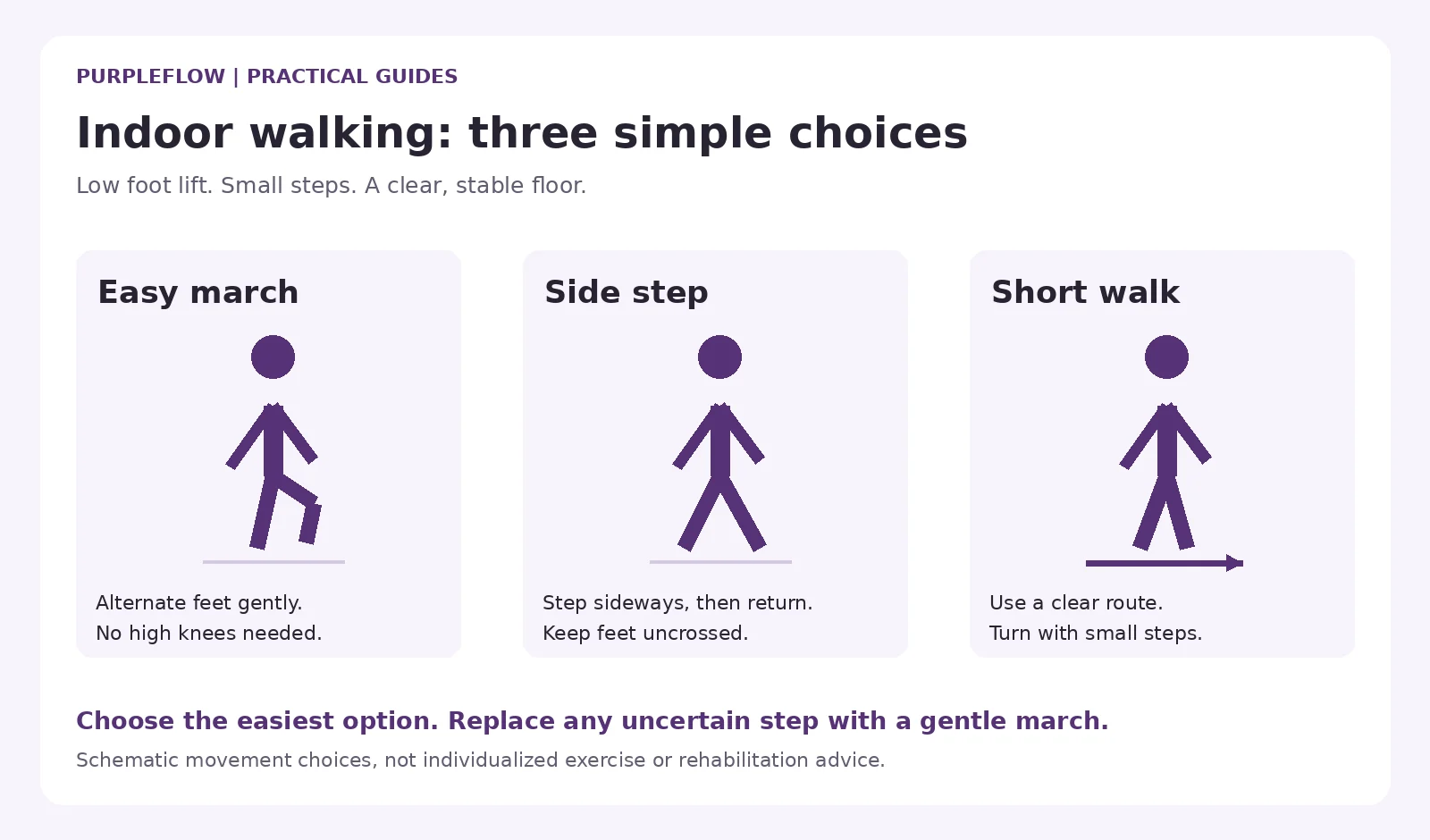
None of these movements needs a deep knee bend, overhead arm swings or speed. Use a comfortable range, and leave any variation that makes you feel unsteady.
Choose your routine: 5, 10 or 20 minutes
These times are suggested session structures, not a requirement to exercise continuously. Pause when you need to. A timer can help you change movements, but it should not pressure you to keep going through symptoms or fatigue.
The five-minute reset
| Time | Movement |
|---|---|
| 0:00–1:00 | Easy march or slow walking to settle into a rhythm. |
| 1:00–2:00 | Comfortable march, with a natural arm swing if steady. |
| 2:00–3:00 | Small side steps, or continue marching. |
| 3:00–4:00 | A short clear-route walk, or an easy march in place. |
| 4:00–5:00 | Gradually slow your steps and finish comfortably. |
Use this as a break after a long stretch of sitting or while waiting for something at home. The point is to make starting easy, not to turn every spare minute into a workout.
The ten-minute beginner session
- First 2 minutes: easy walking or marching.
- Next 6 minutes: repeat the three-minute block below twice.
- Last 2 minutes: gradually slow the pace.
Three-minute block: 1 minute of comfortable marching, 1 minute of small side steps, then 1 minute of short walking or marching. Keep the whole block easy initially; you do not have to make the middle section brisk.
The twenty-minute option
- First 3 minutes: begin gently and find a steady rhythm.
- Next 15 minutes: repeat the same three-minute block five times.
- Last 2 minutes: slow down and finish.
Twenty minutes is an option once shorter sessions feel manageable, not a goal you need to reach this week. If a continuous session does not suit you, separate shorter walks can be easier to fit into the day.
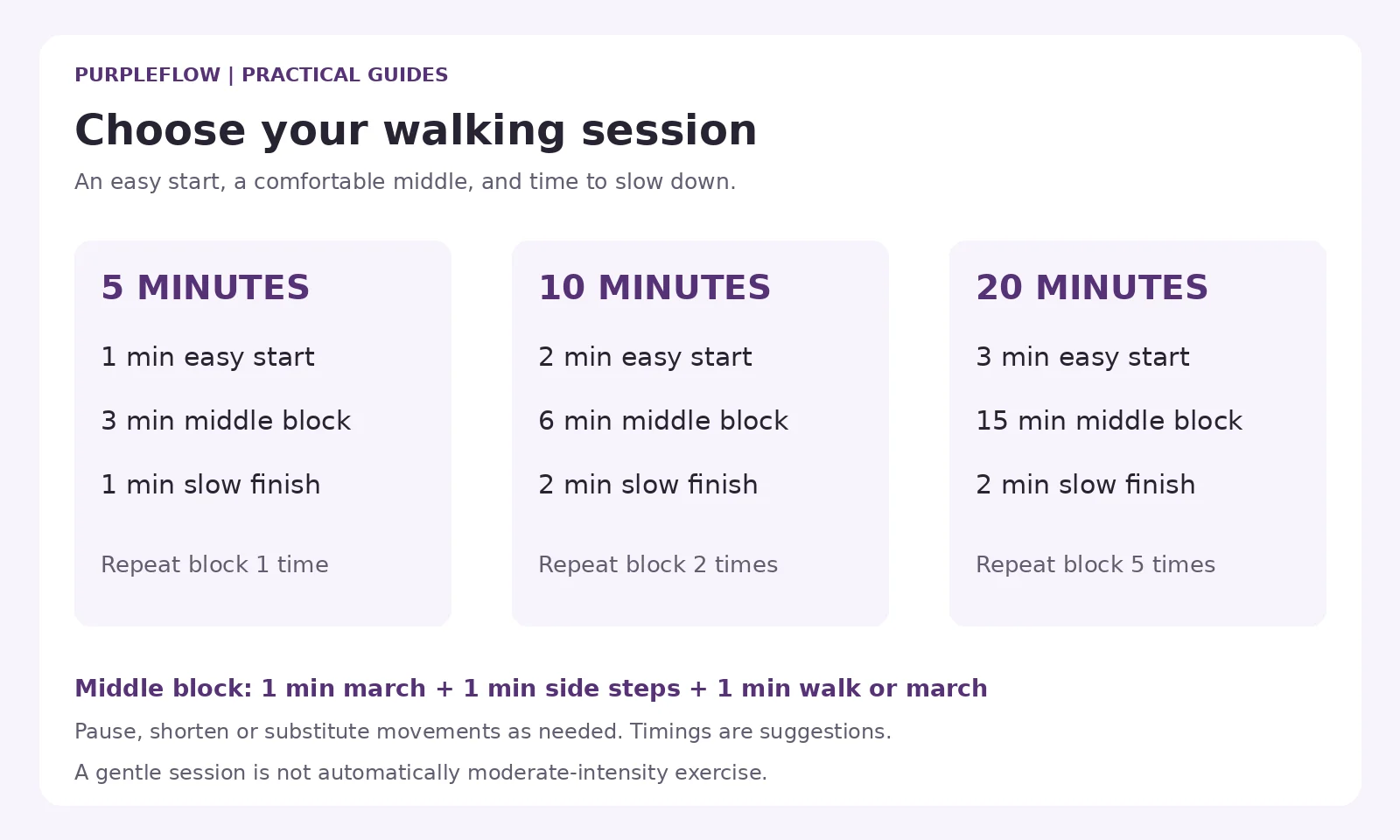
Download the illustrated indoor walking cards and one-week activity log (PDF). The cards contain the same timings as this page, so you can use them without keeping your phone screen on. No signup or equipment purchase is needed.
Make it easier without giving up the session
Choose smaller steps, reduce your pace or replace side steps with marching. If you feel rushed by the minute changes, keep one comfortable movement for the whole middle block.
If standing is not suitable, a seated alternative may work better. The NHS sitting-exercise guide includes gentle alternating hip marches using a stable, non-wheeled chair. Follow its setup guidance and lift each foot only as comfortably as you can. A seated version is a different activity, not an automatic equivalent to a brisk standing walk.
If you have an injury, a condition affecting balance or mobility, recent surgery, or advice to limit activity, ask a clinician or physiotherapist which movements fit your situation. Stop if movement causes pain, dizziness or unusual breathlessness. Chest pain or fainting warrants urgent medical attention.
Progress one thing at a time
Repeat a manageable session a few times before changing it. Notice how you feel during the walk and afterwards. If the session remains comfortable, choose one of these changes:
- Add a little time. Add one extra three-minute block to the middle rather than jumping straight from 5 to 20 minutes.
- Add another walking break. Keep your original session and try another short break later in the day.
- Change the pace slightly. In one middle minute, walk a little faster while keeping your steps controlled. Return to an easy rhythm for the next minute.
Do not increase duration, pace and movement complexity together. Repeat the easier version or take a rest day when you need it. You are building a routine, not passing a fitness test.
How does this fit into a full activity week?
The CDC’s adult guidelines recommend at least 150 minutes of moderate-intensity aerobic activity per week, or an equivalent vigorous mix, plus muscle-strengthening activity on at least two days. Activity can be spread across the week in smaller chunks.
A gentle indoor walking break is worthwhile, but its minutes are not necessarily moderate-intensity minutes. This plan also does not replace strength training. Use it as one practical piece of a week that fits your ability, alongside activities you enjoy.
For more options, see our low-impact cardio ideas for home. Our daily walking guide covers the broader walking habit; this routine makes no promise of a particular weight change.
Frequently asked questions
Can marching in place replace a walk outside?
It can provide a convenient indoor movement option. It is not identical to covering outdoor distance, and the effort depends on your pace. Choose the option that is safe and practical for you.
How many steps will I get in ten minutes?
There is no dependable number for this mixed routine. A tracker may count marching differently from hallway walking. Use time and how you feel rather than an invented step total.
Will it disturb downstairs neighbors?
Keeping the foot lift low and landing softly may help. Skip jumping and fast stomping. Do not add a loose rug or unstable mat to reduce noise; a secure floor matters more.
Can I do it while watching television?
Yes, if the screen is in front of you and the space is clear. Keep an easy rhythm and avoid twisting to see the screen. You can use audio alone if looking at a screen affects your balance.
Your first session
Clear a small area, choose the five-minute reset and start gently. Afterwards, note the time, what you did and whether it felt easy, comfortable or too demanding. That short record is enough to help you choose a sensible next session.
Routine diagrams and interval cards: Purpleflow. They illustrate movement choices and timing, not individualized physiotherapy instructions.
Purpleflow publishes informational content, not personal medical advice. See our wellness disclaimer and editorial policy.