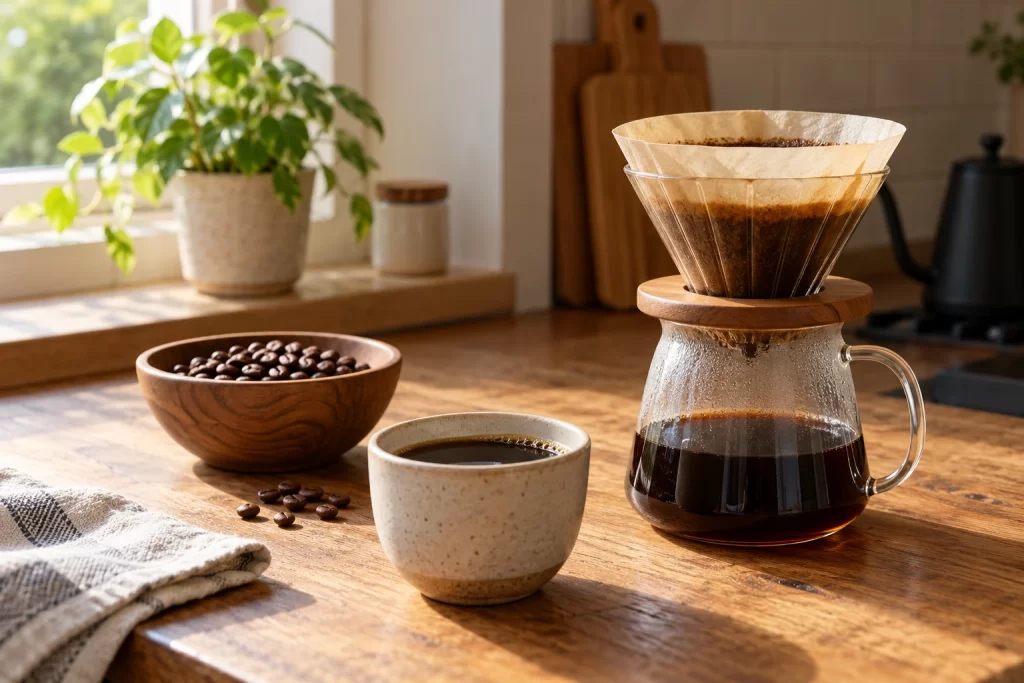
Coffee can absolutely help with energy and focus. The catch is that timing often matters as much as amount.
A cup at the right moment can make a morning feel easier or help you settle into deep work. A cup at the wrong moment can leave you jittery in the afternoon and wide awake at bedtime wondering why you are tired-but-not-sleepy.
The good news: you do not need a complicated caffeine protocol. You just need a simple way to think about when coffee helps and when it starts stealing from your sleep.
The short answer
For most adults, the best time to drink coffee is usually:
- in the morning or early afternoon
- 30 to 60 minutes before you want peak alertness
- early enough that it does not spill into your sleep window
A practical rule is this:
- If coffee helps you feel focused and you still sleep well, your timing is probably fine.
- If you feel wired late, struggle to fall asleep, or wake up feeling unrested, your last cup is probably too late.
According to MedlinePlus, caffeine reaches peak blood levels within about an hour, and you may continue to feel the effects for four to six hours. The FDA also notes that people vary a lot in caffeine sensitivity and in how quickly they clear it from the body.
That is why the “best time” is not one magic clock time for everybody.
Why coffee timing matters

Caffeine works largely by blocking adenosine, a brain chemical that helps you feel sleepy. The NIH explains that adenosine builds up during the day, and caffeine interrupts that sleepy signal for a while.
That is great when you want to feel more alert.
It is less great when:
- you are using coffee to push through chronic sleep debt
- you keep drinking caffeine late in the day
- you are sensitive to it and do not realize it
This is why some people can drink espresso after dinner and fall asleep anyway, while others notice sleep problems from a much earlier cup.
Best time to drink coffee for different goals
1. For morning energy
If you want coffee to help you start the day, morning is the obvious and usually safest window.
You do not have to follow internet rules that say you must wait a precise number of minutes after waking. For many people, coffee in the first part of the morning is completely fine.
A simple approach:
- wake up
- drink some water
- eat something if coffee hits your stomach hard
- have coffee when you actually want to feel more alert
If you feel shaky, anxious, or acidic when you drink coffee first thing, try:
- having it with breakfast instead of before food
- making the first cup smaller
- switching one strong cup to two lighter cups earlier in the day
2. For focus and deep work
If your goal is better concentration, coffee usually works best before the task, not halfway through when you are already fading.
A useful rhythm is to drink coffee 30 to 60 minutes before:
- a work session
- studying
- a long meeting block
- creative work that needs sustained attention
That timing lines up reasonably well with the way caffeine rises in the bloodstream.
If you tend to crash, try pairing coffee with:
- water
- a protein-rich snack
- a real meal instead of just caffeine
Coffee helps alertness. It does not replace food, hydration, or sleep.
3. Before a workout
Some people like coffee before exercise because it makes the session feel easier or more energetic. If that works for you, a cup 30 to 60 minutes before training is a reasonable starting point.
Two things matter here:
- Your stomach — coffee before movement does not feel great for everyone.
- Your bedtime — a late workout plus late caffeine can be a bad combination if sleep is already shaky.
If you train in the evening, it may be smarter to skip the coffee and protect sleep instead.
4. For better sleep
If sleep quality is one of your goals, the best time to drink coffee is usually earlier than you think.
Because caffeine can keep affecting you for hours, many people do best when their coffee stays in the morning to early afternoon range.
A good test:
- If you go to bed around 10:00 to 11:00 p.m., try keeping your last caffeinated drink in the early afternoon or earlier.
- If you are sensitive to caffeine, move that cutoff even earlier.
- If sleep improves, you have your answer.
You do not need to argue with your body. If late coffee makes sleep worse, it is too late for you.
A simple coffee timing template you can actually use
Instead of chasing one “perfect” time, use these simple patterns.
If you wake around 6:00 to 7:00 a.m.
A practical rhythm might look like:
- first cup: 7:00 to 9:00 a.m.
- optional second cup: 11:00 a.m. to 1:00 p.m.
- after that: switch to decaf or non-caffeinated drinks if sleep matters
If you wake around 8:00 to 9:00 a.m.
Try:
- first cup: 8:30 to 10:30 a.m.
- optional second cup: 12:00 to 2:00 p.m.
- later afternoon: only if you know it does not affect your sleep
If you work late or on shifts
Anchor your coffee to bedtime, not just the clock.
Ask:
- When do I need to be asleep?
- How late can I drink caffeine without messing that up?
That matters more than whether the clock says 2 p.m. or 5 p.m.
How much coffee is too much?
The FDA says 400 milligrams of caffeine per day is an amount not generally associated with negative effects for most adults.
That is not a target to hit. It is more like an upper boundary for many healthy adults.
Also remember:
- coffee is not the only source of caffeine
- tea counts
- soda counts
- energy drinks count
- some supplements and medicines count too
The FDA also notes that regular brewed coffee can vary a lot in caffeine content. One large cafe drink may contain much more caffeine than you think.
Signs your coffee timing is working against you

Your coffee schedule may need adjusting if you notice:
- trouble falling asleep
- lighter or more restless sleep
- waking up tired even after enough time in bed
- afternoon jitters or anxiety
- heartburn or an upset stomach
- needing more and more caffeine just to feel normal
MedlinePlus notes that too much caffeine can contribute to restlessness, shakiness, insomnia, headaches, anxiety, and a fast heart rate.
If that sounds familiar, do not just switch brands. First try changing timing, then amount.
Common coffee timing mistakes
Using coffee to cover up exhaustion
Coffee can help with alertness. It does not fix:
- too little sleep
- poor hydration
- not eating enough
- an overloaded schedule
If you are constantly chasing energy with caffeine, the real problem may be elsewhere.
Letting the second cup drift too late
This is one of the most common mistakes.
A coffee at 10:30 a.m. is very different from one at 4:30 p.m., even if both feel harmless in the moment.
Forgetting that “small” caffeine adds up
You may think you only had one coffee, but the real total might include:
- morning coffee
- iced tea at lunch
- afternoon cola
- pre-workout or energy drink
Mixing caffeine and alcohol
The CDC warns that caffeine does not reduce alcohol’s effects on your body. It may just make you feel less impaired than you really are.
So what is the best time to drink coffee?
If you want one practical answer, here it is:
The best time to drink coffee is when it helps the part of your day that needs alertness most, while still leaving enough distance from bedtime that sleep stays protected.
For most people, that means:
- first cup in the morning
- optional second cup around late morning or early afternoon
- little to no caffeine later in the day if sleep is important
That is boring advice. It is also the advice that works.
FAQs
Is it bad to drink coffee right after waking up?
Not necessarily. There is no strong everyday rule that says coffee immediately after waking is automatically bad. If it feels fine and your sleep is good, it is probably okay. If it makes you feel jittery or acidic, try water or breakfast first.
Should I wait 90 minutes after waking before having coffee?
You do not have to. Some people prefer waiting a bit because they feel steadier that way, but it is not a universal rule. The better question is whether your current timing helps energy without hurting sleep.
Can I drink coffee after lunch?
Maybe, but this is where people get tripped up. If your sleep is light, inconsistent, or delayed, an after-lunch coffee may be too late for you. Try moving it earlier for a week or two and compare your sleep.
Is one big coffee better than two smaller coffees?
Often, two smaller earlier coffees feel smoother than one huge one. It depends on the total caffeine, your sensitivity, and whether the second cup stays early enough.
Does decaf still count as coffee?
Yes. Decaf still has some caffeine, but far less than regular coffee. For many people, decaf is a good late-day option when they want the ritual without most of the stimulant effect.
A calm rule of thumb to keep
Coffee works best when it is supporting your day, not borrowing from your night.
If you want better energy, better focus, and better sleep, try this for one week:
- keep coffee mostly in the morning
- make your last caffeinated drink earlier than usual
- watch sleep, mood, and afternoon energy
That small change tells you more than any internet caffeine debate.
Disclaimer
This article is for general education and does not replace medical advice. If you are pregnant, breastfeeding, have anxiety, reflux, arrhythmia, sleep problems, high blood pressure, or take medications that may interact with caffeine, check with a qualified clinician about what is appropriate for you.
Sources and further reading
- FDA: Spilling the Beans — How Much Caffeine is Too Much?
- MedlinePlus: Caffeine
- NIH News in Health: Tired or Wired? Caffeine and Your Brain
- CDC: Effects of Mixing Alcohol and Caffeine
Sources
- Spilling the Beans: How Much Caffeine is Too Much?
- Caffeine: MedlinePlus
- Tired or Wired? Caffeine and Your Brain
- Effects of Mixing Alcohol and Caffeine
Related reading: If you want to dial in the rest of your caffeine routine, see How Much Caffeine Is Too Much? A Practical Daily Limit Guide and Is Coffee on an Empty Stomach Bad for You? What to Know Before Your First Cup.
Purpleflow publishes informational content, not personal medical advice. See our wellness disclaimer and editorial policy.