If you are short on time but still want a workout that feels real, a 15-minute HIIT workout at home can be one of the best tools you have. It is fast, flexible, and easy to fit into a busy day. You do not need fancy gym equipment, an hour-long routine, or a perfect schedule. What you do need is a clear plan, smart pacing, and enough effort to make those minutes count.
HIIT stands for high-intensity interval training. In simple terms, that means you work hard for a short burst, recover briefly, and repeat. That structure makes HIIT appealing for people who want efficient workouts, but it also means you need to be a little smarter than the usual “go as hard as possible” advice. The goal is not to wreck yourself in 15 minutes. The goal is to challenge your heart, lungs, and muscles with good form and a pace you can actually sustain.
This guide gives you a complete, practical home HIIT session you can use this week. It includes a short warm-up, a simple no-equipment circuit, easy beginner modifications, and a cooldown that helps you recover well. It is designed for normal humans at home, not fitness influencers with endless energy and a garage full of machines.
Why a 15-Minute HIIT Workout at Home Can Still Work
One reason people underestimate short workouts is that they compare them to longer gym sessions without thinking about intensity. Fifteen minutes of distracted exercise rarely feels like much. Fifteen minutes of structured intervals is different. When the work periods are focused and the rest periods are controlled, your heart rate climbs quickly and your body has to respond. You can finish feeling challenged, sweaty, and mentally sharper without losing half your day.
That does not mean every 15-minute HIIT session should be all-out. A better mindset is to think “deliberately hard.” You should be breathing heavily, working with purpose, and noticing the effort. But you should still be able to keep solid form. A short workout only becomes useful when the movements are clean enough to train the muscles you want instead of just flailing through the timer.
HIIT also works well at home because it removes friction. You do not need to commute to a gym, wait for equipment, or talk yourself into a long session. You can roll out a mat, clear a small space, and start. That is a huge advantage when consistency is the real goal.
What You Need Before You Start
- A small open space where you can squat, step back, and get down to the floor safely
- A timer on your phone or watch
- A mat or folded towel if your wrists or knees need support
- Water nearby
- Supportive shoes if you are doing impact moves on a hard floor
If you are new to exercise, recently injured, pregnant, or managing a health condition, scale the workout down and check with a qualified clinician if needed. Fast does not have to mean reckless.
Warm Up First, Even If You Are in a Hurry
A quick warm-up is not optional. It helps your joints loosen up, gets your breathing moving, and makes the first work interval feel less shocking. It also helps you spot stiffness before you start asking your body to move faster.
Use this simple 2-minute warm-up:
- 30 seconds: March in place and swing your arms
- 30 seconds: Bodyweight good mornings or hip hinges
- 30 seconds: Slow squats with a reach overhead
- 30 seconds: Step-back lunges or alternating knee lifts
Keep it controlled. You are not trying to get tired yet. You are trying to feel ready.

The 15-Minute HIIT Workout at Home
Here is the full structure:
- 2 minutes: Warm-up
- 10 minutes: Main HIIT circuit
- 3 minutes: Cooldown
For the main circuit, perform 40 seconds of work followed by 20 seconds of rest. Complete all 5 moves, then repeat the full round one more time.
Round structure
- Squats — sit back, keep your chest up, and stand with control
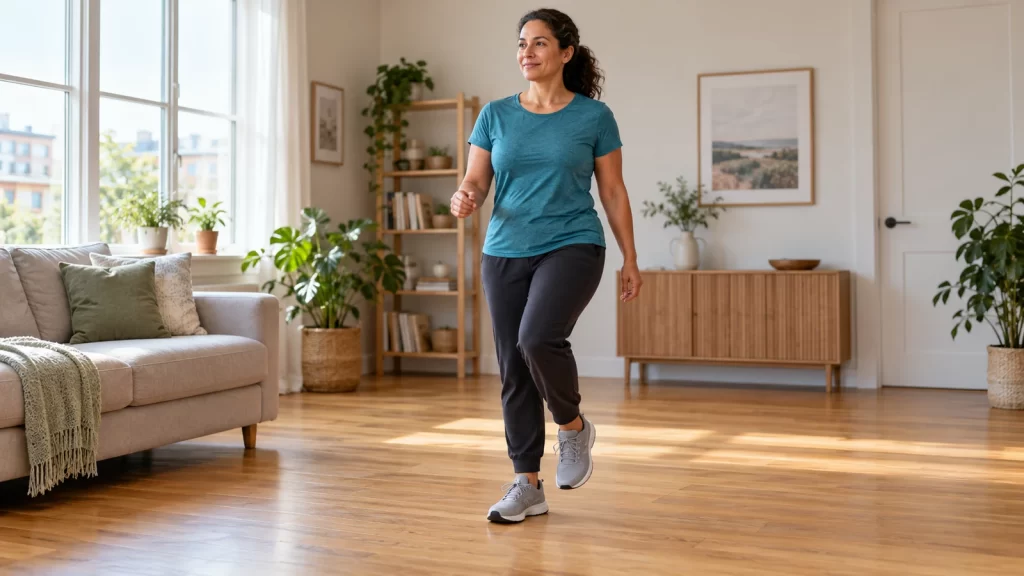
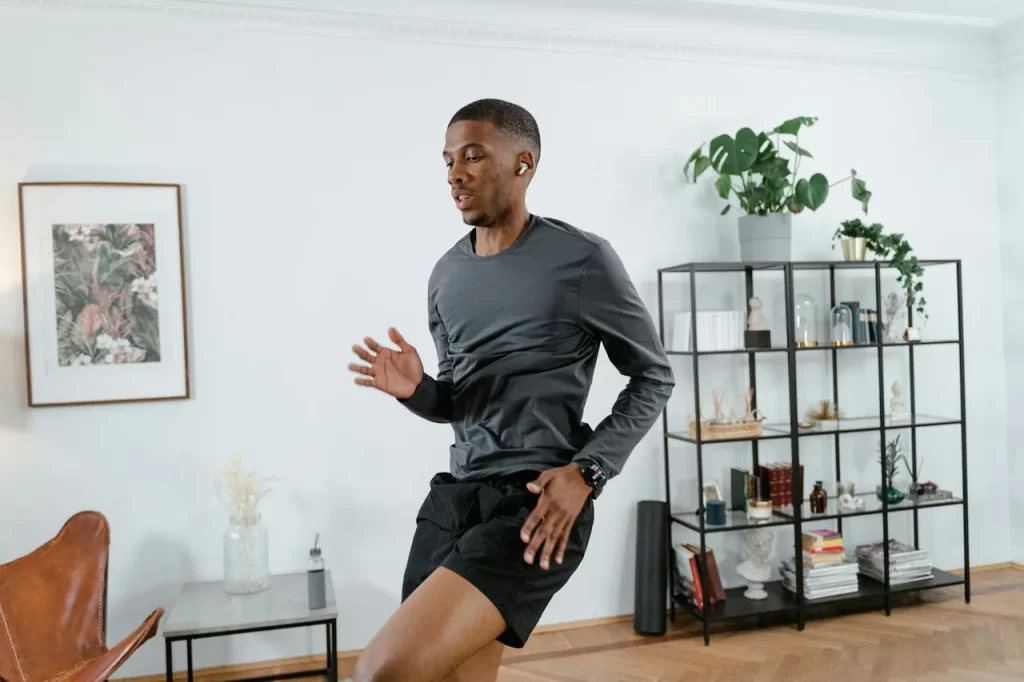
- High knees or fast march — choose impact or low-impact based on your level
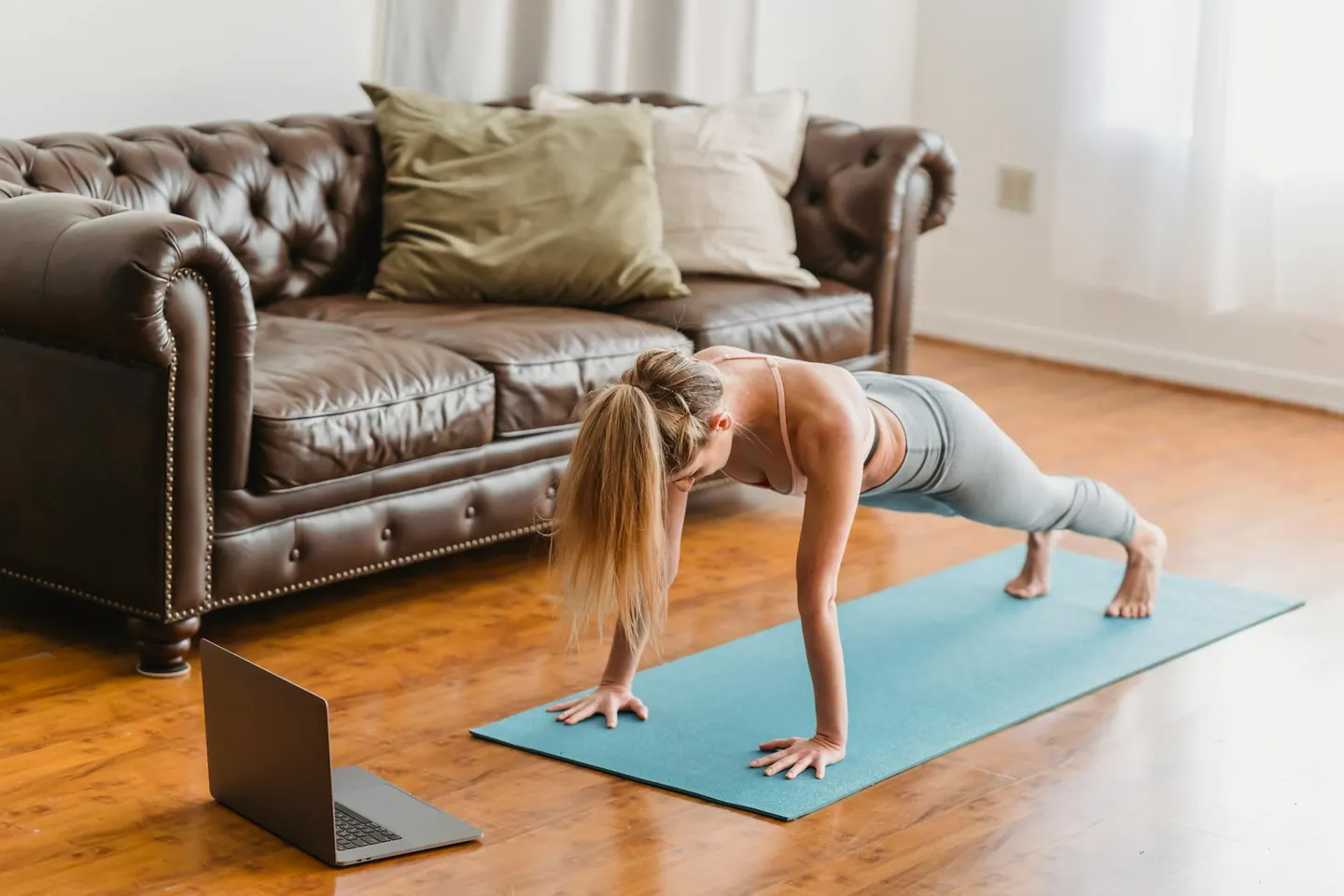
- Push-ups or incline push-ups — use a countertop, bed, or bench if needed
- Reverse lunges — alternate legs, or hold on to a wall for balance
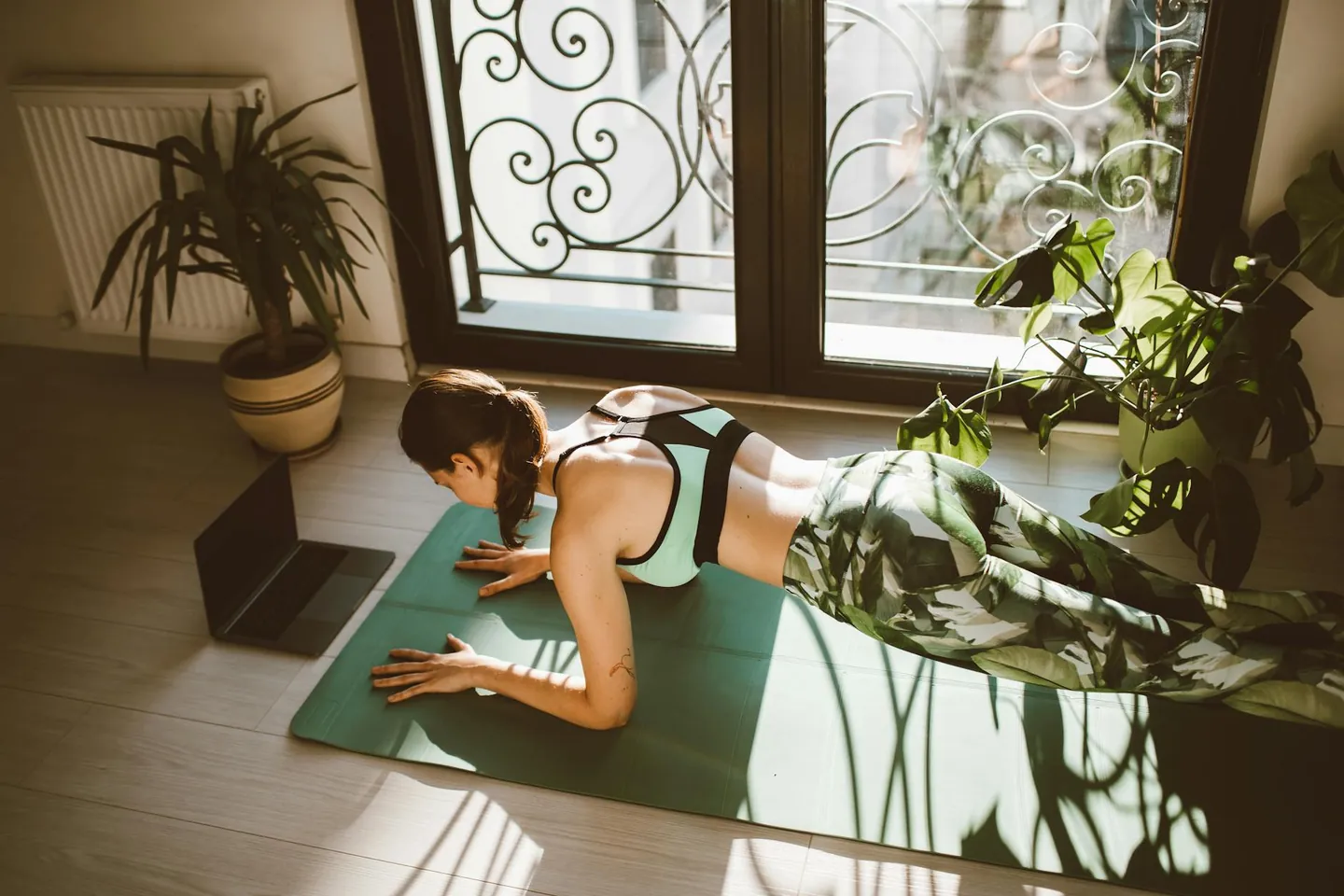
- Plank shoulder taps or mountain climbers — move slowly enough to keep your hips steady
This combination works well because it hits the major movement patterns: lower body strength, cardio, upper body pushing, balance and coordination, plus core stability. It also keeps the workout moving without needing transitions between equipment or complicated setups.

How Hard Should It Feel?
During the 40-second work periods, you should feel like you are working at about a 7 to 9 out of 10 effort depending on your experience level. You should be breathing hard by the middle of the round, but you should still be able to hold form. If your knees are collapsing, your back is rounding, or you are gasping so hard that everything turns sloppy, you have gone too far.
A useful rule is this: the workout should feel challenging by the end of each work period, but not chaotic. You want enough intensity to make 15 minutes count, not so much intensity that the session becomes random survival mode.
Beginner Modifications That Still Work
You do not need to copy the hardest version of every movement. In fact, most people get a better training effect by scaling the session to their current level. The best HIIT workout is the one that you can repeat consistently with decent form.
- Replace high knees with a brisk march in place
- Use incline push-ups instead of floor push-ups
- Swap reverse lunges for alternating step-backs or supported split squats
- Use plank holds instead of shoulder taps or mountain climbers
- Reduce work intervals to 30 seconds if 40 seconds is too much right now
These changes do not make the workout fake. They make it usable. Smart scaling lets you keep control and build confidence instead of quitting because the workout was designed for someone else’s body.
How to Make the Workout Harder Without Losing Control
If this routine becomes too easy, do not immediately chase crazier moves. First, tighten the basics. Move with better range. Squat a little deeper. Make your push-ups cleaner. Keep your core tighter in plank work. Then add difficulty in a way that makes sense:
- Increase speed slightly while keeping good form
- Change the interval to 45 seconds work and 15 seconds rest
- Add a third round if you want a longer session
- Use light dumbbells for squats or lunges if you have them
- Switch the cardio movement to skater steps, squat thrusts, or jumping jacks if your joints tolerate impact well
Progress should feel intentional. Harder is only useful when it still looks like exercise, not panic.
Common Mistakes in a 15-Minute HIIT Workout
The biggest mistake is skipping the warm-up and blasting into the first interval cold. The second biggest mistake is treating every rep like a race. Fast movement is not the same thing as effective movement. If you slam through squats with bad depth or bounce through lunges without balance, you are mostly practicing sloppiness.
Other mistakes worth avoiding:
- Using the wrong level: if every interval leaves you wrecked after 20 seconds, scale down
- Resting too much: if you take unplanned long breaks every round, reduce the difficulty
- Ignoring impact issues: choose low-impact versions if your joints are not happy
- Repeating HIIT every day: more is not always better when recovery is poor
- Forgetting the cooldown: ending abruptly can leave you feeling tight and more drained than necessary
Cool Down in 3 Minutes
A short cooldown helps your breathing settle and gives your body a cleaner transition out of workout mode. Keep it simple:
- 1 minute: slow walk around the room or gentle march in place
- 30 seconds per side: calf stretch or hip flexor stretch
- 30 seconds: chest opener with hands behind back or against a doorway
- 30 seconds: slow forward fold with bent knees or seated hamstring stretch
The goal is not to force flexibility. The goal is to bring the system down gradually and finish the session feeling collected instead of abruptly stopping while your heart is still racing.

How Often Should You Do This Workout?
For most people, two to four HIIT sessions a week is more than enough, especially if you also walk, do some strength work, or stay active in other ways. If every session is high effort, recovery matters. Sleep, food quality, hydration, and stress all affect how these workouts feel. A short routine can be highly effective, but only if your body is getting enough support between sessions.
An easy weekly approach could look like this:
- Monday: 15-minute HIIT workout
- Tuesday: walk and mobility
- Wednesday: strength training or another HIIT session
- Thursday: light movement and stretching
- Friday: repeat the 15-minute HIIT workout
This kind of schedule keeps intensity in the week without making every day feel like a test.
Who This Workout Is Best For
This routine works especially well for busy adults who want a practical cardio session at home, people who need a fallback workout for days they cannot get to the gym, and anyone who prefers simple bodyweight training over complex programs. It is also a strong option for building momentum. If you have been stuck in the “I do not have time” loop, 15 focused minutes can break that pattern fast.
It may not be the best first step if you are dealing with significant joint pain, returning after a long break, or trying to train through acute fatigue. In those cases, a gentler walk-plus-mobility session may be the smarter move.
Final Takeaway
A 15-minute HIIT workout at home does not have to be complicated to be effective. Warm up briefly, use a few proven bodyweight moves, work hard with control, and cool down properly. That is enough to elevate your heart rate, challenge your muscles, and make progress without giving your entire schedule to fitness.
The real win is not that the workout is intense. It is that it is repeatable. A clear, efficient session you can actually do three times this week is far more useful than a “perfect” program you never start.
References and Further Reading
- CDC: Adult Activity Guidelines
- NHS: How to Warm Up Before Exercising
- NHS: How to Stretch After Exercising
- NHS: Flexibility Exercises
Related reading: For the next practical step after the workout itself, see How to Stretch After a Workout: Best Recovery Stretches and Techniques and How to Recover Faster After a Workout: 7 Things That Actually Help.
Purpleflow publishes informational content, not personal medical advice. See our wellness disclaimer and editorial policy.